
There is something primal about the human fascination with the ocean’s apex predators. Movies have spent decades teaching us to fear the fin slicing through the water, but the reality of shark behavior is far more complex—and fascinating—than Hollywood would have you believe. While shark encounters occur globally, from the sun-drenched coasts of Australia and the USA to the wild waters of South Africa, they remain statistically rare events. Understanding the reality of these creatures is the key to safety. This guide explores the most dangerous sharks in the world, not to instill fear, but to offer a clear perspective on identification and behavior. While sharks are dangerous to humans under specific circumstances, most species actively avoid us. Knowing the difference between aggressive behavior and simple curiosity is crucial for anyone who loves the ocean.
What Makes a Shark Dangerous?
When marine biologists describe a shark as “dangerous,” they aren’t implying malice or an evil nature. Instead, the term refers to capability and temperament. A dangerous shark is simply one with the physical tools—size, teeth, and speed—to inflict life-threatening damage, combined with a temperament that might lead to a bite.
From a biological standpoint, sharks are dangerous because they are efficient hunters that evolved over millions of years. However, understanding the nuance of their behavior helps demystify the risk.
Aggressive Behavior vs. Accidental Encounters
Most incidents labeled as attacks are often cases of mistaken identity or investigation. “Unprovoked” incidents are rare. Many aggressive shark species are actually just investigating their environment using the only tool they have: their mouths. These “exploratory bites” can be devastating due to the shark’s size, but they often aren’t predatory attempts to eat a human.
Habitat Near Humans
Proximity plays a massive role in risk levels. Dangerous sharks often inhabit the surf zone—the exact same strip of ocean where humans swim, surf, and play. This is particularly relevant for beachgoers in Florida, California, and Australia. The more humans enter the shark’s natural habitat, the higher the statistical chance of an encounter.
Size, Speed, and Bite Force
Physical attributes dictate the danger level. A small shark might be aggressive, but it lacks the capacity to be lethal. To be considered truly dangerous to humans, a shark needs the jaw width and bite force to cause significant trauma, along with the speed to close the gap before a swimmer can react.
Shark Feeding Behavior Explained
Shark behavior toward humans is often a case of confusion. Surfers paddling on boards can silhouette against the surface like seals or sea turtles—common prey for large sharks. In murky water, the splash of a swimmer might mimic a distressed fish. Once the shark realizes the mistake (often after a single bite), they usually retreat, though the damage may already be done.
Top 10 Dangerous Sharks in the World
Here is a look at the most dangerous shark species based on their capability, temperament, and history of interactions with humans.
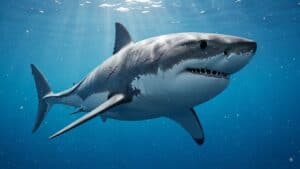
1. Great White Shark—The Most Feared Predator
The great white is the largest predatory fish on Earth and the species most synonymous with shark attacks.
- Risk Profile: The great white shark is dangerous due to its immense size and ambush tactics. They often strike from below with incredible speed. However, they are not mindless killing machines; most human bites are “test bites.” After realizing the human is not a seal (too bony, not enough blubber), they typically leave.
- Location: They are most common in cooler coastal waters, including California, South Africa, and Southern Australia.
2. Tiger Shark—The Ocean’s Opportunistic Feeder
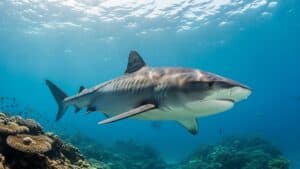
Often called the “garbage cans of the sea,” tiger sharks are famous for eating almost anything, from tires to license plates.
- Risk Profile: The tiger shark danger to humans lies in their non-selective feeding habits. Unlike great whites, who might release a human after a taste, a tiger shark is more likely to continue eating because they are less picky about their food sources.
- Location: They are prevalent in tropical and subtropical waters, posing a notable risk in Hawaii and Northern Australia.
3. Bull Shark—The Most Aggressive Shark Species
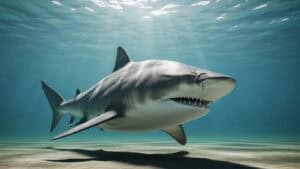 Stout, muscular, and notoriously cantankerous, the bull shark is widely considered the most dangerous shark to humans because of where they live.
- Risk Profile: Bull shark attacks are driven by their territorial nature and high aggression levels.
- Unique Trait: They possess a unique ability to survive in fresh water. This allows them to travel far up rivers and into estuaries, bringing them into close contact with human populations in areas where people don’t expect to see sharks.
4. Oceanic Whitetip Shark – Open Ocean Threat
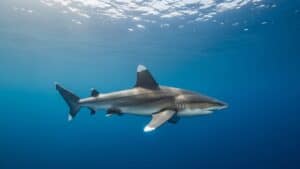
This is a slow-moving but persistent pelagic (open ocean) shark.
- Risk Profile: While they rarely attack swimmers near beaches, they are considered one of the most dangerous sharks in deep ocean settings. They are opportunistic scavengers and are historically implicated in attacks on shipwreck and plane crash survivors adrift at sea.
5. Hammerhead Shark—Powerful and Territorial
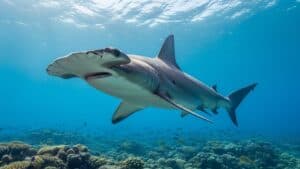
Instantly recognizable by their unique head shape, hammerheads are efficient hunters.
- Risk Profile: Hammerhead shark danger facts are often debated. While smaller species are generally shy, the great hammerhead is large, powerful, and can be defensive. They are less likely to bite humans than bull or tiger sharks but are physically capable of inflicting fatal wounds if threatened.
6. Blacktip Shark—Fast and Unpredictable

Smaller than the giants on this list, Blacktips are nevertheless extremely common in surf zones, especially in Florida.
- Risk Profile: While they are responsible for a high number of bites annually (proving sharks are dangerous to swimmers statistically), these incidents are rarely fatal. They usually occur in murky water when the shark mistakes a hand or foot for a baitfish.
7. Spinner Shark – High-Speed Coastal Shark
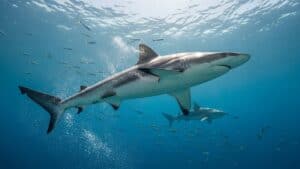
Spinner sharks are known for their spectacular feeding method, leaping out of the water while spinning through schools of fish.
- Risk Profile: Similar to the Blacktip, the risk comes from their feeding frenzies near beaches. If humans are swimming in the middle of a school of baitfish, a spinner shark may accidentally bite a person in the chaos of the hunt.
8. Sand Tiger Shark – Misunderstood but Risky
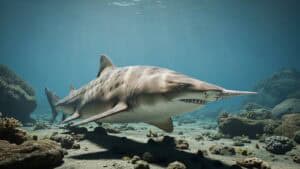
With a mouth full of jagged teeth that are always visible even when the mouth is closed, the sand tiger looks terrifying.
- Risk Profile: Despite their menacing appearance, they are generally docile and slow-moving. However, their large size classifies them as a potential threat. They may bite if bothered or harassed by divers, but unprovoked aggression is rare.
9. Blue Shark – Pelagic Encounters Explained
The blue shark is a sleek, beautiful shark found in the deep ocean.
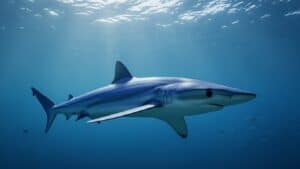
- Risk Profile: This is another case of open-water danger. Blue sharks are curious and can be persistent with divers or people in the water after boat accidents. They are not coastal threats but require caution in deep-sea environments.
10. Mako Shark—Fastest Shark in the World
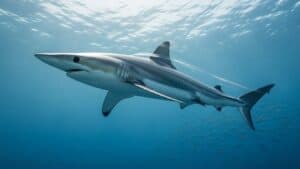
The shortfin mako is the cheetah of the ocean, capable of swimming at burst speeds of up to 45 mph.
- Risk Profile: The risk here is speed and power. While attacks on swimmers are rare because makes prefer deep water, they are a top game fish. Their danger level spikes significantly for fishermen; a hooked mako can be incredibly dangerous and has been known to jump into boats.
Frequently Asked Questions About Dangerous Sharks
To truly understand the risks associated with these animals, we need to look beyond the list and analyze the behavior and statistics. Here are the answers to the most frequently asked questions about the world’s most dangerous sharks.
1. Which shark is officially responsible for the most human fatalities?
The Great White Shark (Carcharodon carcharias) holds the record for the highest number of unprovoked attacks and fatalities. According to the International Shark Attack File (ISAF), Great Whites are responsible for over 300 recorded unprovoked attacks. However, it is important to note that Great Whites often bite out of curiosity or mistaken identity. They investigate objects with their mouths, and unfortunately, a “test bite” from a 15-foot predator can be fatal, even if the shark has no intention of eating the victim.
2. Why is the Bull Shark often considered more dangerous than the Great White?
While the Great White has the numbers, many experts consider the Bull Shark (Carcharhinus leucas) to be the most dangerous shark to humans pound-for-pound. The reason is habitat and aggression. Bull Sharks have a unique physiological ability to regulate salt in their bodies, allowing them to swim far up freshwater rivers and dwell in shallow, murky coastal waters—the exact places humans swim. Their high testosterone levels make them exceptionally aggressive and territorial, and because they hunt in low-visibility water, they hunt by bumping and biting rather than visual identification.
3. What makes the Tiger Shark so unpredictable?
Tiger Sharks (Galeocerdo cuvier) are formidable because they are indiscriminate eaters. Unlike Great Whites, which prefer fatty prey like seals and may release a human after realizing they aren’t a seal, Tiger Sharks are less picky. They have specialized teeth that can shear through turtle shells, and their stomachs have been found to contain tires, license plates, and other debris. If a Tiger Shark decides to bite, it is more likely to continue eating than to let go, making their encounters highly dangerous.
4. Are Oceanic Whitetip Sharks a threat to beachgoers?
Generally, no. Oceanic Whitetip Sharks (Carcharhinus longimanus) live in the open ocean, far away from crowded beaches. They pose very little threat to the average swimmer or surfer. However, they are a primary concern for open-ocean castaways and shipwreck survivors. They are opportunistic hunters in a food-scarce environment, meaning they are bold and persistent when they encounter potential prey. They are believed to be responsible for hundreds of unrecorded deaths following shipwrecks during World War II.
5. Do sharks actually hunt humans for food?
This is one of the biggest misconceptions. Humans are not a natural part of any shark’s diet. We are too bony and lack the high-fat blubber that species like Great Whites require for energy. Most unprovoked attacks are cases of mistaken identity—where a surfer’s silhouette looks like a seal—or curiosity. The vast majority of shark incidents are “bite and release,” where the shark realizes its mistake and swims away. If sharks actively hunted humans, fatalities would be in the thousands daily, given how many people are in the ocean.
6. Which shark is the fastest, and does speed equal danger?
The Shortfin Mako Shark (Isurus oxyrinchus) is the cheetah of the ocean, capable of reaching speeds up to 45 mph (74 km/h) with bursts even faster. While they are not responsible for many unprovoked attacks on swimmers, their speed and ability to jump high out of the water make them extremely dangerous to fishermen. When hooked, Makos have been known to leap into boats, causing chaos and severe injury with their teeth and thrashing tails.
7. Why do Blacktip Sharks bite so many people if they aren’t “man-eaters”?
Blacktip Sharks (Carcharhinus limbatus) are responsible for a significant percentage of shark bites in places like Florida. However, these attacks are almost never fatal. Blacktips hunt small schooling fish in the surf zone. In murky, churning water, they often mistake a hand or foot splashing in the waves for their prey. These are classified as “hit and run” attacks—the shark bites, realizes it isn’t a fish, and immediately flees. The injuries are usually relatively minor, requiring stitches rather than surgery.
8. How can I avoid a shark attack?
While the risk is statistically microscopic, you can lower it further with common sense. Avoid swimming at dawn or dusk, which are prime feeding times for many shark species. Do not swim with open wounds or while wearing shiny jewelry, which can resemble fish scales in the light. Avoid swimming near fishing piers or where seabirds are diving, as this indicates baitfish (and likely predators) are present. Finally, always swim in groups; sharks are ambush predators and are less likely to approach a group of people.
9. Are hammerhead sharks aggressive toward humans?
There are several species of hammerhead sharks, but the Great Hammerhead (Sphyrna mokarran) is the largest and potentially most dangerous. Generally, hammerheads are not aggressive toward divers and are often quite shy. However, because of their size (up to 20 feet), they should be treated with extreme caution. Defensive attacks can occur if the animal feels cornered or threatened. There have been very few confirmed fatal attacks by hammerheads throughout history.
10. What role do humans play in the danger of sharks?
The reality is that we are far more dangerous to sharks than they are to us. While sharks kill fewer than 10 people globally per year, humans kill an estimated 100 million sharks annually for their fins, meat, or as bycatch. This rapid depletion of shark populations destabilizes marine ecosystems. Understanding that sharks are not villains, but vital stewards of the ocean, is key to respecting them. The “danger” they pose is a natural consequence of entering a wild environment, not a sign of malice.
Respecting the Apex Predator
Sharks are essential to the health of our oceans. They keep prey populations in check and remove sick or weak fish from the ecosystem. While the species listed above have the potential to cause harm, attacks remain exceedingly rare events.
By educating ourselves on shark behavior and respecting their environment, we can coexist with these magnificent creatures. The fear of sharks is natural, but it shouldn’t stop us from enjoying the beauty of the ocean—provided we remember that when we step into the water, we are guests in their home.
Are Sharks Dangerous to Humans? (The Reality Check)
It is easy to look at this list and feel a sense of dread, but it is vital to keep perspective. While sharks are dangerous animals that demand respect, humans are not their natural prey.
To put the risk in context, you are statistically far more likely to be injured by a car accident, a lightning strike, or even a mosquito-borne illness than by a shark. We enter their home every time we step into the ocean, yet millions of people swim safely every day.
From a conservation standpoint, the dynamic is actually reversed: sharks are far more in danger from humans than we are from them. Overfishing and habitat loss threaten shark populations globally, disrupting the balance of our ocean ecosystems.
Respecting the Ocean
The top 10 dangerous sharks listed here are powerful, efficient predators, but they are also vital to the health of our oceans. Understanding their behavior is the best way to coexist safely.
Here are a few tips to stay safe in the water:
- Avoid swimming at dawn or dusk: these are prime feeding times for many shark species.
- Don’t wear shiny jewelry: the reflection can look like fish scales to a hunting shark.
- Stay out of the water if you are bleeding: While sharks don’t go into a frenzy at a drop of blood like in the movies, the scent can attract them.
- Avoid swimming near bait balls: if you see birds diving or fish jumping, a predator is likely feeding below.
If you are interested in learning more about ocean conservation or want to be prepared for any situation, check out our guide on “How to survive a shark encounter.”