
Among the most unique and captivating predators in the aquarium hobby, the freshwater tiger moray eel (Gymnothorax polyuranodon) stands out. With its striking tiger-like patterns and mesmerizing, serpentine movement, this eel fascinates aquarists who seek something truly extraordinary. Many hobbyists believe that all moray eels are strictly saltwater creatures, a common misconception that makes this species even more alluring. The freshwater tiger moray eel is a remarkable exception, capable of adapting and thriving in freshwater environments.
This comprehensive guide, brought to you by PredatorBay, will cover everything you need to know about caring for this incredible species. We will explore the ideal tank setup, proper diet and feeding techniques, and how to manage its unique temperament and compatibility with other fish. Get ready to learn what it takes to successfully keep one of the most interesting predators in the aquatic world.

What is a Freshwater Tiger Moray Eel?
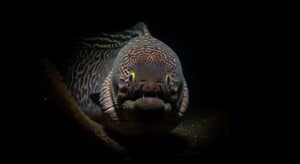
The freshwater tiger moray eel is instantly recognizable by its stunning appearance. Its body, which ranges from a vibrant yellow to a muted brown, is covered in a series of dark, irregular spots and blotches. This pattern creates the “tiger” stripes for which it is named, providing excellent camouflage in its natural environment. Like all morays, it has a long, snake-like body, a powerful jaw, and a dorsal fin that runs the length of its back.
Its scientific name, Gymnothorax polyuranodon, places it within the large Muraenidae family of moray eels. Native to the Indo-Pacific region, this species is found in the rivers, estuaries, and mangrove swamps in areas like Northern Australia, Indonesia, and the Philippines. This habitat is key to understanding its needs in an aquarium.
While it is often called a “true” freshwater species, its classification is somewhat more complex. Gymnothorax polyuranodon is euryhaline, meaning it can tolerate a wide range of salinities. In the wild, it frequently moves between pure freshwater rivers and the brackish waters of estuaries. This adaptability means that while it can live in a freshwater aquarium, it often experiences better long-term health and vitality in low-end brackish conditions that mimic its natural home.
Setting Up the Perfect Tank
Creating the right environment is the most critical step to ensuring your freshwater tiger moray eel thrives. These are not beginner fish; they require a specific setup and a dedicated aquarist willing to meet their needs.
Freshwater Tiger Moray Eel Tank Size
Due to its impressive potential length, a large tank is non-negotiable. We recommend a minimum tank size of 75-100 gallons for a single adult eel. A larger tank provides more swimming space and, more importantly, allows for a more stable environment and ample room for the extensive rockwork and hiding places this species requires. A tank with a larger footprint is generally better than a tall one to accommodate its bottom-dwelling nature.
Water Parameters
Getting the water parameters right is essential for the health of your Gymnothorax polyuranodon.
- Freshwater vs. Brackish: This is the most common debate among keepers. While the tiger moray eel can survive in hard, alkaline freshwater, many experienced aquarists report that the eel does best in a low-end brackish environment. Adding a small amount of marine salt to achieve a specific gravity (SG) of 1.005-1.010 often leads to a more robust immune system and better overall health. If you choose a freshwater setup, ensure the water is hard and alkaline.
- Temperature: Maintain a stable temperature between 76-82°F (24-28°C).
- pH Level: The pH should be kept in the alkaline range of 7.5-8.5.
Aquascape and Hiding Spots
Security is paramount for a moray eel. In the wild, they spend most of their time tucked away in crevices, ambushing prey that wanders too close. Replicating this is vital for their well-being.
- Hiding Places: Your aquascape should be built around providing numerous secure hiding spots. PVC pipes are an excellent, inexpensive option and can be easily hidden behind rocks or other decorations. Creating a network of caves and tunnels with stable rockwork will make your eel feel safe. Ensure any rock structures are placed directly on the tank bottom before adding substrate to prevent the eel from undermining them and causing a collapse.
- Secure Lid: Freshwater tiger moray eels are notorious escape artists. Their muscular bodies can squeeze through surprisingly small gaps. A tight-fitting, weighted lid is essential. Any openings for filters or heaters must be securely covered.
- Substrate: A soft substrate, like sand or fine gravel, is recommended. This protects the eel’s delicate, scaleless skin from scratches and abrasions as it moves along the bottom of the tank.
Diet and Feeding Your Eel
As carnivores, freshwater tiger moray eels require a diet of meaty foods. Understanding their feeding habits is key to keeping them healthy and happy.
What Do Freshwater Tiger Moray Eels Eat?
In their natural habitat, their diet consists primarily of small fish, crustaceans like shrimp and crabs, and worms. They are ambush predators, relying on their incredible sense of smell to detect prey rather than their poor eyesight.
Feeding Freshwater Moray Eel in Captivity
A varied diet is crucial to prevent nutritional deficiencies.
- Recommended Foods: Offer a rotating menu of frozen/thawed foods. Great options include shrimp, krill, silversides, nightcrawlers, and small pieces of fish fillet (from species like tilapia or cod).
- Live Foods: While live foods such as ghost shrimp or feeder fish can be effective for enticing a new or picky eater, they should not be the primary diet. Live feeders can introduce diseases and often lack the nutritional value of quality frozen foods.
- Feeding Frequency: Adult eels should be fed 2-3 times per week. Younger eels may require more frequent feedings. It’s important not to overfeed, as this can lead to health problems.
- Feeding Method: Always use long feeding tongs to offer food. Their eyesight is poor, and during a feeding frenzy, they can easily mistake a finger for food. Their bite can be painful and is prone to infection, so caution is advised.
Temperament and Compatibility
Understanding the temperament of the tiger moray eel will help you create a peaceful and safe community tank, if you choose to do so.
Tiger Moray Eel Temperament
These eels are generally reclusive and shy, especially during the day. They will spend most of their time in their preferred hiding spots, often with just their head poking out. They become more active at night, exploring the tank in search of food. Their secretive nature is part of their charm, and providing them with a secure environment will encourage them to be more visible.
Are Freshwater Tiger Moray Eels Aggressive?
Gymnothorax polyuranodon is a predator, but it is not typically aggressive towards fish it cannot eat. Its aggression is almost entirely food-driven. The simple rule is this: if a tank mate is small enough to fit in the eel’s mouth, it will eventually become a meal. They generally ignore larger fish that do not pose a threat.
Freshwater Moray Eel Compatibility
Choosing the right tank mates requires careful consideration.
- Suitable Tank Mates: The best companions are large, robust, and fast-moving fish that are too big to be considered prey. In a brackish setup, excellent choices include large Scats (Scatophagus species), Monos (Monodactylus species), and Archerfish (Toxotes species). Larger, peaceful cichlids or rainbowfish might also work, provided the tank is spacious enough.
- Tank Mates to Avoid: Do not keep them with small, slow-moving fish. Tetras, guppies, and similar-sized community fish will be eaten. Ornamental shrimp and snails will also be viewed as a natural food source and will not survive.
- Keeping Multiple Eels: It is generally best to keep a single freshwater tiger moray eel. They can be territorial towards their own kind unless the aquarium is exceptionally large (200+ gallons) with an abundance of separate hiding spots for each individual.
Growth and Size
One of the most common mistakes new keepers make is underestimating the adult size of this species.
Tiger Moray Eel Full Size
In captivity, the freshwater tiger moray eel can reach an impressive length of up to 3 feet (90 cm), although a size of 2-2.5 feet is more common. This substantial size reinforces the need for a large aquarium from the very beginning. Do not make the mistake of buying a small tank with the plan to upgrade later.
Their growth rate is steady with proper feeding and good water quality. A healthy, well-fed juvenile will grow consistently, reaching its adult size within a few years.
A Truly Unique Predator
The freshwater tiger moray eel is a rewarding but demanding aquatic pet. It is not a fish for the casual hobbyist but rather for the dedicated aquarist looking for a unique centerpiece predator for a large aquarium. Success with this species comes down to careful planning and a commitment to providing its specific needs.
By ensuring you have a large, secure tank with plenty of hiding spots, appropriate water conditions, and suitable tank mates, you can enjoy the rare privilege of watching this magnificent predator thrive. For those ready to take on the challenge, the freshwater tiger moray eel offers an unparalleled experience.
If you are looking to add this incredible species to your collection, check the PredatorBay site for availability. We often have healthy, quarantined Gymnothorax polyuranodon ready for a new home.
Frequently Asked Questions (FAQs)
Q1: Can a tiger moray eel live in freshwater?
Yes, the freshwater tiger moray eel is one of the few moray species that can live in full freshwater. However, many keepers find they do best in low-end brackish water (SG 1.005-1.010), which more closely mimics their natural estuarine habitats and supports their long-term health.
Q2: How big do freshwater tiger moray eels get?
They can grow quite large, typically reaching 2 to 3 feet (about 60-90 cm) in length in a home aquarium. Planning for this full adult size from the start is crucial when selecting a tank.
Q3: What do freshwater tiger moray eels eat?
They are carnivores and should be fed a varied diet of meaty foods. Good options include frozen/thawed shrimp, krill, fish fillet pieces, and nightcrawlers. It’s best to use feeding tongs to avoid accidental bites.
Q4: Are freshwater tiger moray eels aggressive?
They are predatory by nature, but not overly aggressive toward fish they cannot eat. They will consume any tank mate that can fit in their mouth, but tend to ignore larger fish. Their aggression is usually limited to feeding time, when their poor eyesight can lead to accidental nips.
Q5: What are the best tank mates for a tiger moray eel?
Ideal tank mates are large, peaceful, and fast-moving fish that are too big to be considered prey. In a brackish setup, this could include Scats, Monos, or Archerfish. Always research freshwater moray eel compatibility carefully before adding any new fish to the tank.
1 thought on “Is This the World’s Weirdest Freshwater Predator?”