
Introduction
Understanding Mediterranean branzino preparations reveals centuries of coastal culinary heritage. From Italian branzino fish traditions perfected in Tuscan trattorias to Greek branzino fish methods passed through generations of island tavernas, each European branzino approach reflects regional culture and ingredients. This comprehensive guide explores branzino fish Italy techniques, authentic branzino fish Greece recipes, and broader branzino fish cuisine spanning Mediterranean coastlines. Learn branzino fish in Italian cooking fundamentals, master traditional Greek branzino recipe preparations, discover how to cook branzino Italian style with regional variations, and explore authentic Mediterranean branzino preparation methods honoring centuries of European coastal traditions.
Mediterranean Branzino Heritage
The Cultural Significance of Branzino
Mediterranean branzino represents more than mere sustenance—it embodies coastal identity, culinary tradition, and cultural heritage spanning millennia. From ancient Roman fish farms to modern Greek tavernas, European branzino has shaped Mediterranean food culture fundamentally.
Historical context:
Ancient aquaculture: Romans cultivated sea bass in coastal ponds (piscinae) 2,000+ years ago, demonstrating early appreciation for this prized fish.
Coastal economies: Traditional fishing communities throughout the Mediterranean built livelihoods around branzino, creating preservation techniques, recipes, and cultural practices still honored today.
Feast day traditions: Religious celebrations and family gatherings feature whole grilled branzino as centerpiece, symbolizing abundance, celebration, and coastal connection.
Regional identity: Each Mediterranean region claims distinctive branzino preparations reflecting local ingredients, cooking methods, and cultural values—Italian elegance, Greek simplicity, French refinement, Spanish boldness.
Why Branzino Became Mediterranean Icon
Ideal characteristics for coastal cuisine:
Availability: Native to Mediterranean Sea and Eastern Atlantic, branzino swam abundantly in coastal waters where civilizations developed.
Delicate flavor: Mild taste accepts regional herb blends, citrus, olive oil—Mediterranean pantry staples—without being overwhelmed.
Whole-fish culture: Mediterranean tradition favors whole fish presentations demonstrating freshness, quality, and culinary skill—branzino’s manageable size (1-1.5 pounds) serves perfectly.
Versatile preparation: Accepts grilling, roasting, poaching, salt-crusting—methods developed across Mediterranean kitchens over centuries.
Symbolic value: White flesh, elegant appearance, and refined taste positioned branzino as celebration fish worthy of special occasions.
Italian Branzino Fish Traditions
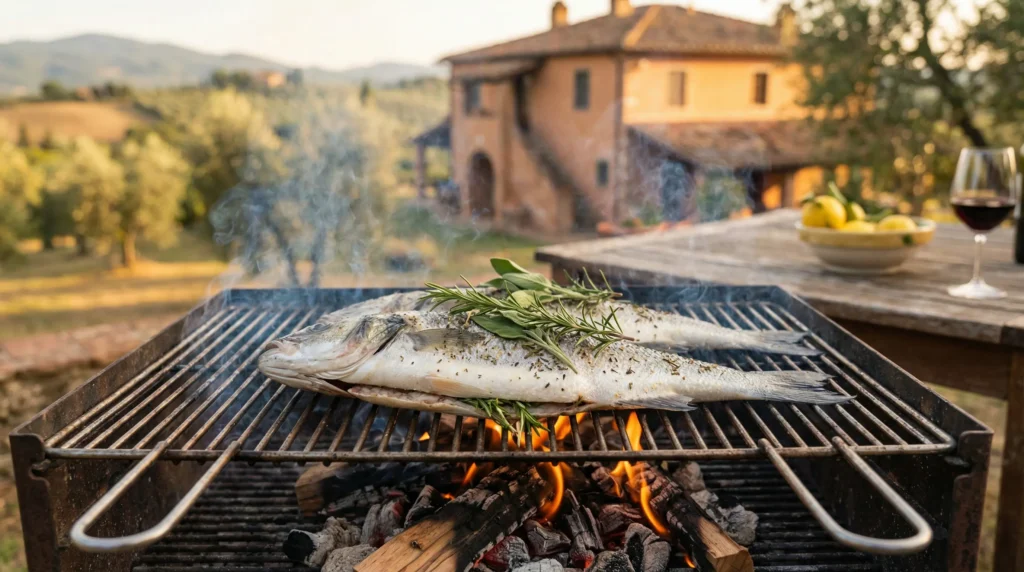
Branzino Fish in Italian Cooking
Italian branzino fish preparations emphasize simplicity, quality ingredients, and respect for the fish’s natural flavor. The philosophy “less is more” guides Italian approaches, allowing branzino’s delicate taste to shine.
Core Italian principles:
Ingredient quality over complexity: Premium olive oil, fresh lemons, aromatic herbs matter more than elaborate sauces or preparations.
Regional variation: Northern Italian cooking differs from Southern traditions, though both honor branzino’s delicacy.
Seasonal awareness: Italians pair branzino with seasonal vegetables and herbs, changing preparations throughout the year.
Traditional techniques: Wood-fired grilling, salt-crusting, gentle roasting methods passed through generations.
How to Cook Branzino Italian Style
Classic Tuscan Preparation:
The quintessential how to cook branzino Italian style approach comes from Tuscany’s coastal regions:
Ingredients:
- Whole branzino (1-1.5 pounds), scaled and gutted
- Extra virgin olive oil (highest quality)
- Fresh lemon (halved)
- Fresh rosemary and sage
- Garlic cloves (smashed)
- Coarse sea salt
- Cracked black pepper
Method:
- Preheat wood-fired grill or oven to 425°F
- Stuff cavity with lemon halves, rosemary, sage, garlic
- Brush exterior generously with olive oil
- Season with sea salt and pepper
- Grill over high heat 5-6 minutes per side OR roast 18-20 minutes
- Finish with additional olive oil drizzle and fresh lemon squeeze
- Serve immediately with seasonal vegetables
Why this works: Simple preparation showcases fish quality, olive oil adds richness without heaviness, herbs provide aromatic complexity, lemon brightens without overwhelming.
Regional Italian Variations
Northern Italian (Lombardy, Veneto):
Branzino al Sale (Salt-Crusted): Premium preparation technique from Northern Italy creates restaurant-theater experience.
Process:
- Mix 5 pounds coarse salt with egg whites
- Encase whole stuffed branzino completely
- Bake at 400°F for 30 minutes
- Crack crust tableside dramatically
- Fish emerges perfectly seasoned, incredibly moist
Pairing: Soave Classico or Verdicchio wine, simple roasted potatoes
Ligurian Style: Basil-forward preparations honoring Liguria’s pesto traditions.
Preparation: Brush fish with basil pesto before grilling, serve with additional pesto drizzle and pine nuts
Central Italian (Tuscany, Lazio):
Roman Branzino al Forno: Classic roasted preparation from trattorias near Rome’s coast.
Ingredients: Cherry tomatoes, capers, black olives, white wine, parsley Method: Roast fish surrounded by vegetables in white wine-olive oil mixture Serving: Family-style from roasting pan
Southern Italian (Sicily, Campania):
Sicilian Branzino: Bolder flavors reflecting North African influences.
Ingredients: Tomatoes, raisins, pine nuts, saffron, fennel Method: Roast with sweet-savory sauce combining Mediterranean and Arabic elements Character: More complex, layered flavors than Northern preparations
Neapolitan Acqua Pazza: “Crazy water” poaching technique.
Liquid: Water, white wine, tomatoes, garlic, chili flakes Method: Gentle poaching creating aromatic broth Serving: Fish and broth together in shallow bowls
Greek Branzino Fish Preparations
Traditional Greek Branzino Recipe Philosophy
Greek branzino fish approaches emphasize freshness, simplicity, and lemon-olive oil combinations fundamental to Hellenic cuisine. The Greek philosophy celebrates ingredients’ natural qualities rather than transforming them.
Greek culinary principles:
Freshness paramount: Greeks insist on daily-caught fish, refusing yesterday’s catch regardless of quality.
Lemon-olive oil foundation: Nearly all traditional Greek branzino recipe variations feature generous lemon and premium olive oil.
Oregano signature: Dried oregano distinguishes Greek preparations from Italian rosemary-thyme profiles.
Charcoal grilling: Traditional Greek method uses natural charcoal creating distinctive smoky flavor.
Simple presentation: Minimal garnish, rustic platters, focus on fish rather than elaborate plating.
Traditional Greek Branzino Recipe
Classic Taverna-Style Grilled Branzino:
The definitive branzino fish Greece preparation served in coastal tavernas:
Ingredients:
- Whole branzino, scaled and gutted
- Greek extra virgin olive oil (robust, peppery variety)
- Fresh lemons (abundant)
- Dried Greek oregano
- Sea salt
- Fresh parsley
- Ladolemono (lemon-olive oil sauce)
Preparation:
- Pat fish completely dry
- Score skin diagonally 3-4 times each side
- Rub with olive oil inside and out
- Season cavity with salt, oregano
- Season exterior with salt
- Grill over charcoal 6-7 minutes per side (longer than Italian style)
- Prepare ladolemono: whisk lemon juice, olive oil, oregano, salt
Serving:
- Transfer to large platter
- Drizzle generously with ladolemono
- Scatter fresh parsley
- Serve with lemon wedges, Greek salad, fried potatoes
Greek vs Italian differences:
Greeks use: More lemon, dried oregano, charcoal grilling, heavier olive oil application, rustic presentation
Italians use: More herbs (rosemary, sage), wood-fired grills, lighter oil touch, elegant plating
Regional Greek Variations
Island Style (Cyclades, Crete):
Branzino with Wild Greens: Serve grilled fish atop bed of horta (boiled wild greens) dressed with lemon-oil.
Cretan Preparation: Include local olive oil varieties (Koroneiki), wild thyme, finish with aged wine vinegar.
Mainland Traditions (Peloponnese):
Morea-Style: Stuff cavity with fennel fronds, slow-grill over olive wood coals.
Coastal Taverna Method: Simple salt-lemon-oregano seasoning, served with skordalia (garlic-potato sauce).
Modern Greek Interpretations:
Athens Contemporary: Grill fish, serve with avgolemono-inspired emulsion (egg-lemon sauce).
Santorini Tourism Style: Present dramatically with local fava bean purée, cherry tomatoes, caper leaves.
Broader European Branzino Traditions
French Mediterranean (Provence, Côte d’Azur)
European branzino preparations extend beyond Italy and Greece to French coastal regions:
Provençal Style:
- Herb-crusted (herbes de Provence: thyme, rosemary, lavender, fennel)
- Served with ratatouille
- White wine beurre blanc sauce
- Refined plating
Technique emphasis: Classical French methods applied to Mediterranean fish—precise temperature control, elegant sauces, artistic presentation.
Spanish Coastal Preparations
Catalonian Approach:
- Romesco sauce accompaniment (red peppers, almonds, tomatoes)
- Grilled over grapevine cuttings
- Served with escalivada (roasted vegetables)
Basque Method:
- Green sauce (parsley, garlic, white wine, olive oil)
- Simple grilling emphasizing fish quality
- Txakoli wine pairing
Andalusian Influence:
- Lighter preparations reflecting North African connections
- Saffron, almonds, dried fruits occasional additions
- Sherry vinegar finishing touches
Turkish and Eastern Mediterranean
Turkish Coastal:
- Sumac and Aleppo pepper seasonings
- Grilled with pomegranate molasses
- Served with pilaf, yogurt sauces
Levantine Touches:
- Tahini-based sauces
- Za’atar seasonings
- Grilled alongside eggplant, peppers
Mediterranean Branzino Preparation Techniques
Wood-Fired Grilling
Traditional Mediterranean branzino preparation emphasizes wood-fired cooking:
Wood selection by region:
- Italy: Olive wood, grapevine cuttings
- Greece: Olive wood, wild thyme branches
- France: Provençal herbs (dried lavender, rosemary stems)
- Spain: Grapevine, almond wood
Why wood matters: Aromatic smoke infuses fish with regional character, high heat creates crisp skin, cultural authenticity connects to tradition.
Salt-Crusting Mastery
Italian invention now practiced throughout Mediterranean:
Regional variations:
- Italian: Egg white binder, herb additions
- French: Precise technique, uniform crust thickness
- Greek: Sea salt only, no binders (traditional method)
- Spanish: Fleur de sel, premium salt varieties
Whole-Fish Philosophy
All Mediterranean cultures share whole-fish preference:
Cultural reasons:
- Quality verification: Whole fish displays freshness transparently
- Flavor enhancement: Bones, skin add richness during cooking
- Traditional service: Whole presentation shows respect, hospitality
- Practical economics: Less waste, maximum value
Authentic Mediterranean Ingredients
Olive Oil Quality
Mediterranean branzino preparation demands premium olive oil:
Regional characteristics:
- Tuscan: Peppery, robust, green fruity notes
- Ligurian: Delicate, almond undertones
- Greek: Strong, herbaceous, fruity
- Spanish: Full-bodied, slightly bitter
Usage: Finish cooked fish with raw olive oil showcasing quality—heat destroys premium oil nuances.
Lemon Varieties
Different Mediterranean lemons create subtle variations:
- Amalfi (Italy): Large, thick-skinned, intensely aromatic
- Greek: Smaller, very juicy, high acidity
- Spanish: Medium, balanced sweet-tart
Herb Traditions
Italian herbs: Rosemary, sage, basil (fresh), parsley Greek herbs: Oregano (dried), parsley, dill, mint French herbs: Thyme, tarragon, fennel, lavender Spanish herbs: Parsley, saffron, smoked paprika
Wine Pairing by Region
Italian Wines with Italian Branzino
Northern Italy:
- Soave Classico
- Verdicchio dei Castelli di Jesi
- Gavi di Gavi
Central Italy:
- Vermentino (Tuscany, Sardinia)
- Frascati (Lazio)
Southern Italy:
- Greco di Tufo (Campania)
- Fiano di Avellino
- Grillo (Sicily)
Greek Wines with Greek Branzino
Mainland:
- Assyrtiko (Santorini)
- Moschofilero (Peloponnese)
- Malagousia
Islands:
- Robola (Kefalonia)
- Vidiano (Crete)
Serving Traditions
Italian Service
Presentation: Elegant white platters, herb garnish, lemon wedges Accompaniments: Roasted potatoes, sautéed greens, simple salad Setting: White tablecloths, proper glassware, multiple courses Portions: Individual whole fish or shared larger specimens
Greek Service
Presentation: Large rustic platters, abundant lemon, parsley Accompaniments: Greek salad, fried potatoes, tzatziki Setting: Paper tablecloths, casual atmosphere, family-style Portions: Sharing encouraged, communal dining emphasized
Contemporary Mediterranean
Modern interpretations: Fusion of traditional techniques with contemporary plating, seasonal local ingredients prioritized, sustainability emphasized, traditional flavors preserved in innovative presentations.
Home Cooking Tips
Recreating Restaurant Quality
Italian authenticity:
- Invest in premium olive oil (finishing touch)
- Use fresh herbs generously
- Don’t oversauce—let fish shine
- Serve immediately while hot
Greek authenticity:
- Make fresh ladolemono
- Use generous lemon
- Don’t undercook—Greeks prefer well-done
- Serve family-style
Shopping Mediterranean Ingredients
Where to find:
- Italian specialty stores (imported olive oils, herbs)
- Greek markets (Greek oregano, olive oil)
- Farmers markets (fresh herbs, local ingredients)
- Online importers (specific regional products)
Conclusion
Mediterranean branzino traditions reveal rich cultural heritage spanning Italian branzino fish elegance, Greek branzino fish simplicity, and broader European branzino diversity. Understanding branzino fish Italy preparations versus branzino fish Greece methods illuminates how geography, culture, and tradition shape branzino fish cuisine. Whether mastering branzino fish in Italian cooking sophistication, authentic traditional Greek branzino recipe techniques, or learning how to cook branzino Italian-style regional variations, honoring Mediterranean branzino preparation traditions, connects modern cooking to centuries of coastal heritage. These time-tested European approaches transform simple fish into cultural celebrations worthy of Mediterranean culinary legacy.
Frequently Asked Questions
Q: What is Italian branzino fish preparation? Italian branzino emphasizes simplicity with premium olive oil, fresh herbs (rosemary, sage), lemon, and minimal seasoning. Regional variations include Tuscan wood-grilled, Roman oven-roasted with tomatoes, Northern salt-crusted, and Sicilian sweet-savory preparations. Italian style prioritizes ingredient quality over complexity.
Q: How do Greeks cook branzino fish? Traditional Greek branzino features charcoal grilling, generous lemon-olive oil dressing (ladolemono), dried oregano, and rustic presentation. Greeks prefer fish slightly more cooked than Italians, serving family-style on large platters with fried potatoes, Greek salad, and abundant lemon wedges.
Q: What’s the difference between Italian and Greek branzino? Italian branzino uses fresh herbs (rosemary, sage), wood-fired grills, lighter olive oil, and elegant plating. Greek branzino features dried oregano, charcoal grills, heavier lemon-oil application, and rustic platters. Italians emphasize refinement; Greeks prioritize freshness and simplicity.
Q: How to cook branzino Italian style at home? Stuff whole branzino with lemon, rosemary, sage, and garlic. Brush with premium olive oil, season with sea salt and pepper. Grill at 425°F for 5-6 minutes per side or roast for 18-20 minutes. Finish with an additional olive oil drizzle and lemon. Serve immediately.
Q: What is Mediterranean branzino preparation? Mediterranean branzino encompasses Italian, Greek, French, Spanish, and Turkish coastal traditions. Common elements include whole-fish grilling, olive oil, lemon, regional herbs, and simple techniques showcasing fish quality. Each region adds distinctive ingredients and methods reflecting local culture.
Q: What wine pairs with Italian branzino? Italian white wines pair excellently: Verdicchio dei Castelli di Jesi, Soave Classico (Northern), Vermentino (Tuscan), and Greco di Tufo (Southern). Choose crisp, acidic whites with mineral notes. Match the wine region to the preparation region when possible for authentic pairing.
Q: What is a traditional Greek branzino recipe? Grill whole branzino over charcoal after rubbing with olive oil and seasoning with salt and oregano. Serve with ladolemono (whisked lemon juice, olive oil, oregano, salt), scattered parsley, lemon wedges, Greek salad, and fried potatoes. Simple, fresh, generous with lemon.
Q: Is European branzino different from American? European branzino refers to wild-caught Mediterranean fish or traditionally farmed European specimens. American markets primarily offer farmed branzino from Mediterranean aquaculture or domestic farms. Quality can be excellent from both sources; European preparations emphasize traditional regional techniques while American approaches incorporate diverse influences.
Q: What herbs go with Mediterranean branzino? Italian: rosemary, sage, basil, parsley (fresh). Greek: oregano (dried), parsley, dill. French: thyme, tarragon, fennel, herbes de Provence. Spanish: parsley, saffron. Mediterranean preparations favor regional herb profiles reflecting local culinary traditions and available aromatics.
Q: Can I use the Greek method for Italian branzino? Yes, though results differ from authentic Italian style. Greek charcoal grilling, heavy lemon-oregano, and ladolemono create a distinctly Greek flavor profile. For Italian authenticity, use a wood-fired grill, fresh rosemary-sage, a lighter olive oil touch, and elegant presentation. Both methods produce delicious results honoring different traditions.