
Introduction
Understanding the branzino fish comparison helps home cooks make informed seafood choices. Whether evaluating branzino vs salmon for health benefits, branzino vs cod for mild flavor, or branzino vs sea bass to clarify confusing nomenclature, comprehensive comparisons guide purchasing decisions. This expert analysis examines the branzino vs Chilean sea bass difference, determines if branzino is better than salmon, compares branzino vs mahi mahi taste profiles, assesses branzino vs tilapia (which is better), analyzes the branzino vs Dover sole comparison, identifies what fish is similar to branzino, and reveals the best substitute for branzino fish when unavailable. From branzino vs. halibut to branzino vs. striped bass, discover how European sea bass measures against popular alternatives.
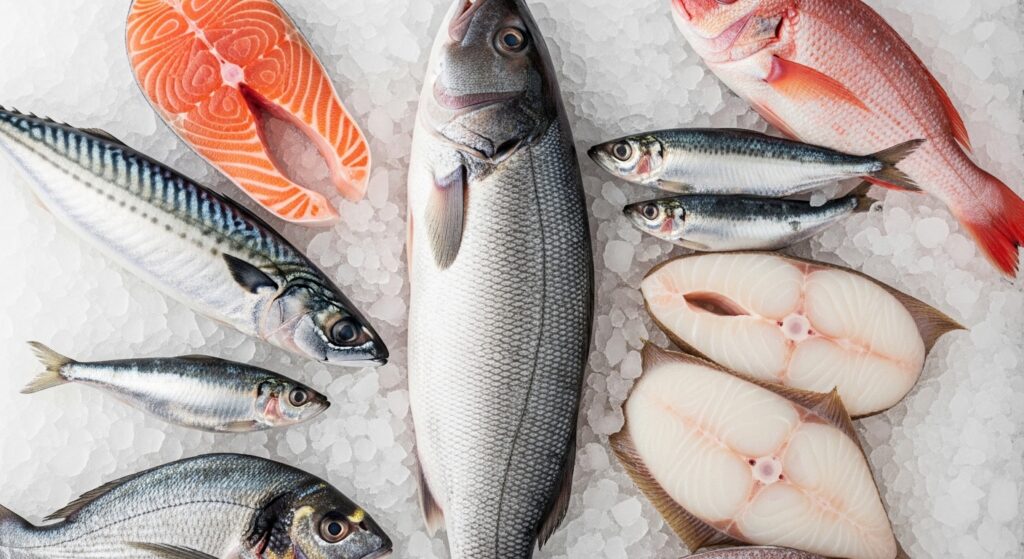 Branzino vs Sea Bass
The Naming Confusion Explained
The branzino vs. sea bass question creates universal confusion because “sea bass” describes dozens of unrelated species globally. Understanding taxonomic differences clarifies this common mix-up.
Branzino (European Sea Bass):
- Scientific name: Dicentrarchus labrax
- Family: Moronidae
- Origin: Mediterranean Sea, Eastern Atlantic
- Common names: Branzino (Italian), loup de mer (French), European sea bass (English)
When Mediterranean or European restaurants list “sea bass,” they mean branzino—the terms are completely interchangeable in this context. However, many other fish worldwide carry “sea bass” designations despite belonging to different families entirely.
Other “Sea Bass” Species:
Chilean Sea Bass (Patagonian Toothfish):
- Scientific name: Dissostichus eleginoides
- Family: Nototheniidae
- Origin: Southern Ocean, Antarctica
- Completely different species marketed as “sea bass” for appeal
Black Sea Bass:
- Scientific name: Centropristis striata
- Family: Serranidae
- Origin: Western Atlantic (U.S. East Coast)
- Different family, different characteristics
White Sea Bass:
- Scientific name: Atractoscion nobilis
- Family: Sciaenidae
- Origin: Eastern Pacific (California coast)
- Unrelated to branzino despite name
Giant Sea Bass:
- Scientific name: Stereolepis gigas
- Family: Polyprionidae
- Origin: Eastern Pacific
- Endangered species, rarely available
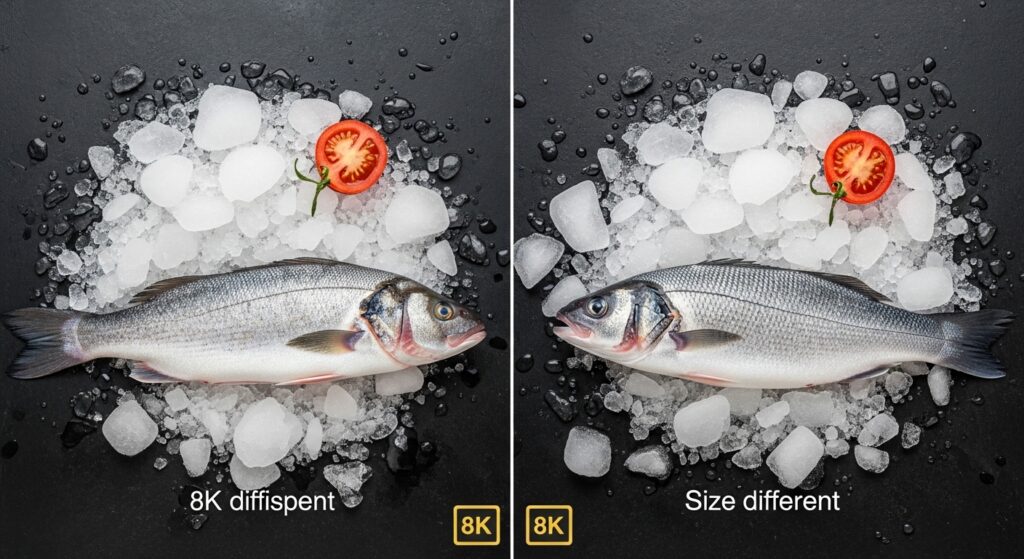
The branzino vs. Chilean sea bass difference represents one of the most dramatic seafood comparisons despite both sharing “bass” nomenclature:
Habitat and Origin:
- Branzino: Temperate coastal Mediterranean waters (8-14°C)
- Chilean sea bass: Deep Antarctic waters (0-4°C), depths to 3,000 meters
Size:
- Branzino: 40-50cm typical, 1-1.5 pounds market size
- Chilean sea bass: Can exceed 2 meters, 100+ pounds (market portions 6-12 ounces)
Taste and Texture:
- Branzino: Mild, delicate, slightly sweet, lean (2-3% fat), firm flakes
- Chilean sea bass: Rich, buttery, fatty (13-16% fat), ultra-tender, almost velvety
Price Range:
- Branzino: $10-$15 per pound whole, $18-$25 fillets
- Chilean sea bass: $25-$35 per pound for fillets (among most expensive fish)
Sustainability
- Branzino: Primarily farmed with ASC/BAP certifications available
- Chilean sea bass: Wild-caught with sustainability concerns, MSC certification rare
Cooking Methods:
- Branzino: Grilling, roasting whole, high-heat methods
- Chilean sea bass: Gentle preparations (poaching, baking) preserving delicate texture
Which is better? Neither—completely different eating experiences. Branzino suits those preferring lean, delicate fish with mild flavor. Chilean sea bass appeals to diners wanting rich, buttery, indulgent seafood. The dramatic price difference ($15 vs. $30 per pound) often determines choice.
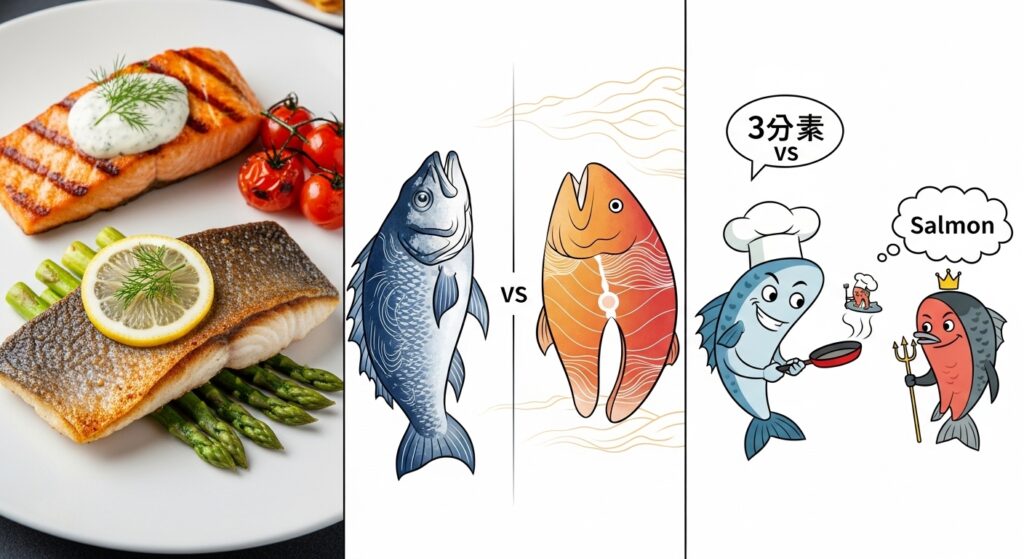
Branzino vs Salmon Analysis
Is Branzino Better Than Salmon?
Is branzino better than salmon? This frequently asked question lacks simple answers—each fish excels in different contexts:
Flavor Comparison:
- Branzino: Mild, subtle sweetness, delicate, non-fishy, clean ocean taste
- Salmon: Rich, pronounced, distinctive, slightly oily, robust flavor
Fat Content:
- Branzino: 2-3% fat (very lean white fish)
- Salmon: 13-15% fat (fatty fish, notably higher)
Texture:
- Branzino: Firm, flaky, medium-dense, moist when properly cooked
- Salmon: Tender, buttery, rich mouthfeel, can be fatty
Nutrition (per 100 g):
- Branzino: 97-120 calories, 18-20g protein, 0.4-0.6g omega-3
- Salmon: 180-206 calories, 20-22g protein, 2.0-2.6g omega-3
Omega-3 Fatty Acids: Salmon provides 4-5x more omega-3s than branzino, making it superior for heart health, brain function, and anti-inflammatory benefits. However, branzino still offers meaningful omega-3 content in a leaner package.
Cooking Versatility:
- Branzino: Whole grilling, roasting, Mediterranean preparations, delicate sauces
- Salmon: Grilling, baking, smoking, curing, raw (sashimi), diverse applications
Price:
- Branzino: $10-$15 per pound whole, $18-$25 fillets
- Salmon: $8-$15 per pound depending on type (farmed Atlantic vs wild Alaskan)
Environmental Considerations:
- Branzino: Farmed Mediterranean, ASC certification available
- Salmon: Wild Alaskan sustainable, farmed Atlantic has environmental concerns
The Verdict: Choose branzino if you prefer mild flavor, lean protein, low calories, and whole fish Mediterranean cuisine.
Choose salmon if you want a rich taste, maximum omega-3s, versatile cooking methods, fatty fish, and bold flavors.
Neither is objectively “better”—they occupy opposite ends of the fish spectrum, serving different culinary needs and nutritional priorities.
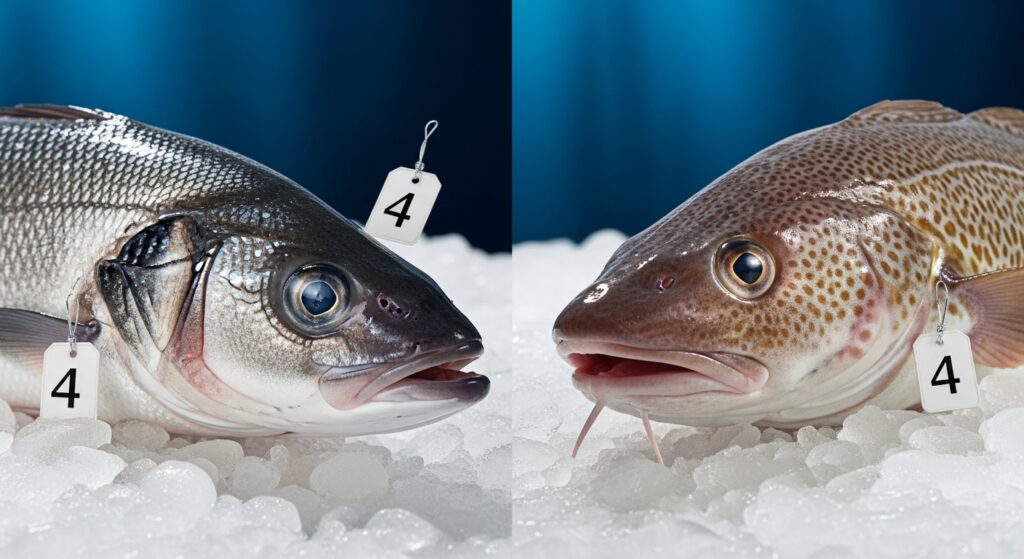
Branzino vs Cod Comparison
Mild White Fish Showdown
Branzino vs. cod represents a more comparable matchup—both are mild white fish with similar applications:
Similarities:
- Both mild, non-fishy flavor profiles
- White flesh that flakes when cooked
- Lean protein sources (low fat)
- Versatile across cooking methods
- Family-friendly appeal
Key Differences:
Flavor Intensity (1-10 scale):
- Branzino: 2.5/10—Mild with subtle sweetness, buttery undertones
- Cod: 1.5/10 – Very mild, almost neutral, minimal inherent flavor
Texture:
- Branzino: Firmer, larger flakes, better moisture retention
- Cod: Softer, can become mushy if overcooked, delicate structure
Fat Content:
- Branzino: 2-3% fat
- Cod: 0.5-1% fat (extremely lean)
Price:
- Branzino: $10-$15 per pound whole, premium positioning
- Cod: $8-$12 per pound fillets, mainstream pricing
Availability:
- Branzino: Specialty markets, upscale grocers, farm-raised consistency
- Cod: Widely available, mainstream supermarkets, both wild and farmed
Cooking Considerations:
- Branzino: Forgives slight overcooking due to higher fat, holds shape well
- Cod: Requires careful timing, easily overcooked, benefits from gentle methods
Nutritional Comparison (per 100 g):
- Branzino: 97-120 cal, 18-20g protein, 2-3g fat
- Cod: 82-90 cal, 18-20g protein, 0.5-1g fat
Best Use Cases:
- Branzino: When you want premium white fish with character, whole presentations, Mediterranean preparations
- Cod: When you need affordable, neutral-flavored fish for heavily seasoned dishes, fish tacos, fish and chips
Which is better? Branzino offers superior flavor complexity and texture but costs more. Cod provides excellent value for budget-conscious cooking or preparations where fish serves as a vehicle for other flavors.
Additional Fish Comparisons
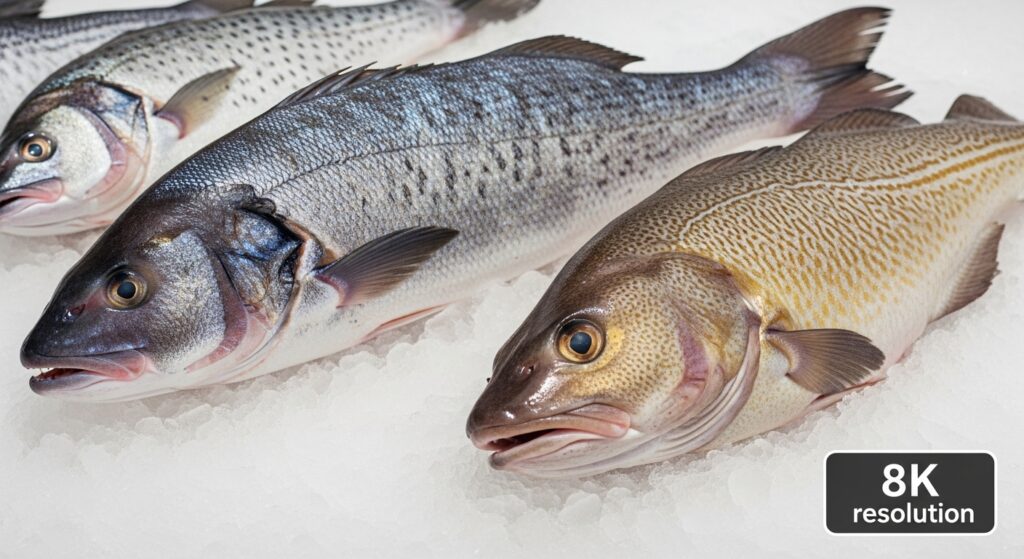
Branzino vs Halibut
Both are premium white fish with similar delicacy:
Similarities:
- Mild, sweet flavor profiles
- Firm, flaky texture
- Lean protein sources
- Premium pricing categories
- Excellent for grilling
Differences:
- Halibut: Larger fish (portions cut from massive specimens up to 500 pounds)
- Halibut: Slightly firmer, denser texture
- Halibut: More neutral flavor (branzino sweeter)
- Halibut: $22-$35 per pound (even more expensive)
- Halibut: Wild-caught Pacific primarily
- Branzino: Whole fish presentations available
- Branzino: Farm-raised consistency
Substitution: Halibut fillets substitute well for branzino fillets in recipes requiring firm white fish. Expect slightly less sweetness and a firmer bite.
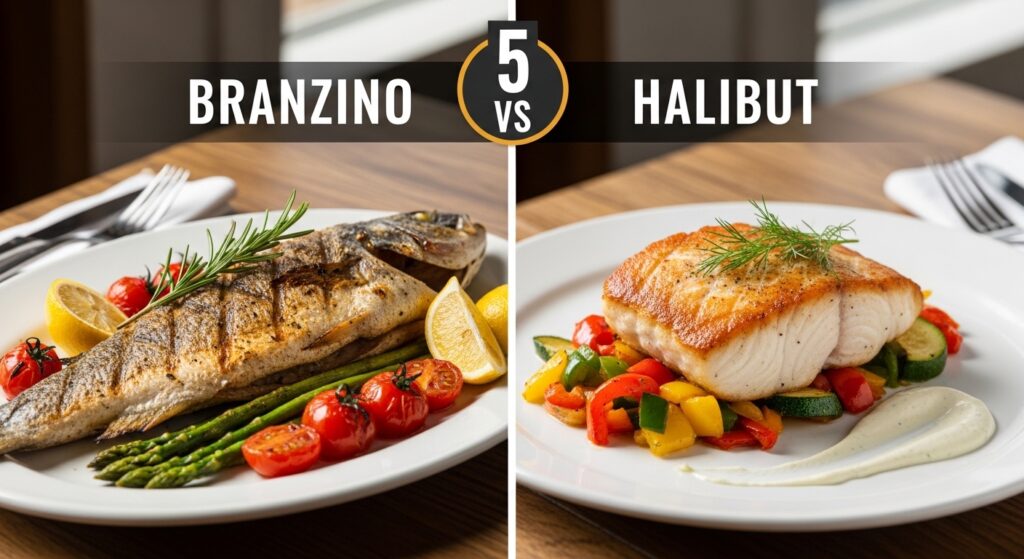
Branzino vs Striped Bass
Close relatives: interesting comparisons.
Similarities:
- Same family (Moronidae)
- Similar appearance and biology
- Comparable flavor profiles
- Both called “bass.”
Differences:
- Striped bass: Native to Atlantic North America
- Striped bass: Larger (3-30 pounds typical)
- Striped bass: Slightly stronger flavor
- Striped bass: Wild-caught primarily (some farming)
- Striped bass: Seasonal availability (spring-fall peak)
- Branzino: Mediterranean origin
- Branzino: Smaller, consistent sizing
- Branzino: Milder, more delicate
- Branzino: Year-round farmed supply
Which to choose? Branzino for refined Mediterranean preparations and consistent availability. Striped bass for heartier American coastal cuisine and seasonal local sourcing.
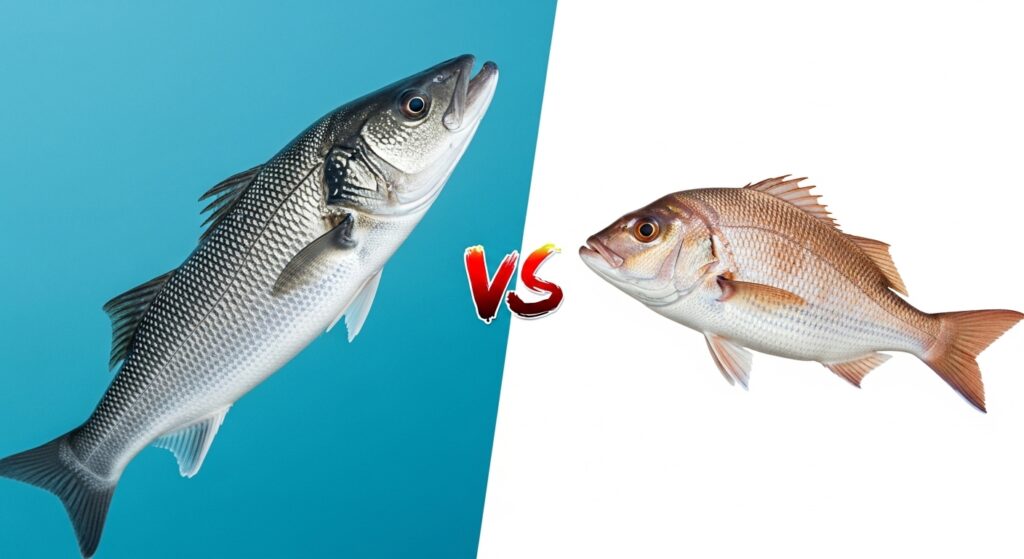
Branzino vs Snapper
Popular comparisons in restaurants:
Flavor:
- Branzino: Milder, more delicate, subtle sweetness
- Snapper: Slightly stronger, nutty notes, more pronounced
Texture:
- Branzino: Firm, medium flakes, tender
- Snapper: Firmer, denser, meatier bite
Color:
- Branzino: Pure white flesh
- Snapper: White to slightly pink tint
Price:
- Branzino: $10-$15 per pound whole
- Snapper: $12-$20 per pound depending on variety (red snapper premium)
Availability:
- Branzino: Farmed year-round
- Snapper: Wild-caught, seasonal variations
Best uses:
- Branzino: Delicate Mediterranean preparations, whole grilling
- Snapper: Robust preparations, Caribbean cuisine, ceviche
Substitution potential: Moderate—snapper’s stronger flavor and firmer texture create different eating experiences but work in similar applications.
Branzino vs Trout
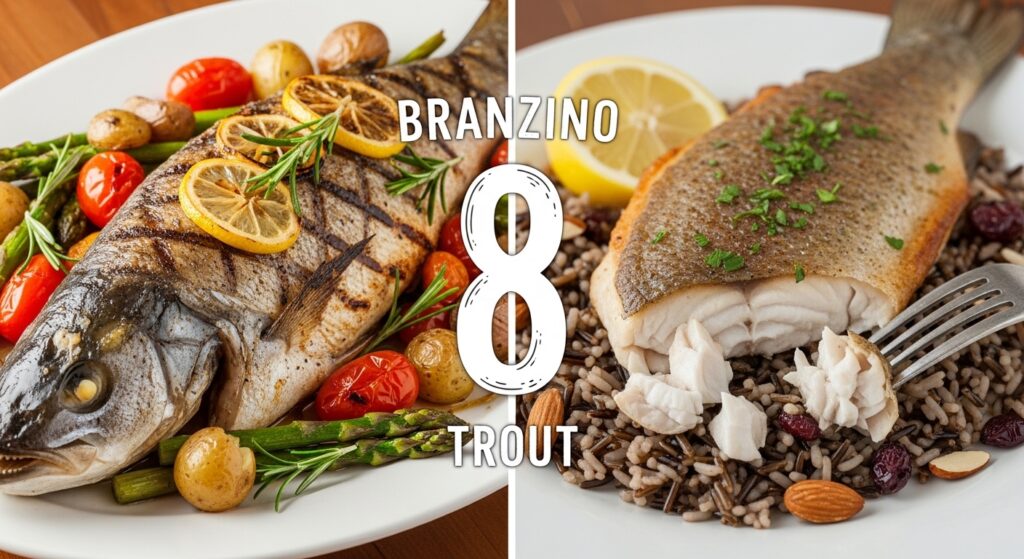
Interesting comparison spanning wild and farmed options:
Similarities:
- Both available farmed and wild
- Similar size ranges
- Delicate flavors
- Whole fish presentations common
Differences:
- Trout: Freshwater species (rainbow, brown, brook)
- Trout: Slightly earthier flavor
- Trout: Pink to white flesh depending on diet
- Trout: $6-$10 per pound (more affordable)
- Branzino: Marine species
- Branzino: Cleaner ocean taste
- Branzino: White flesh consistently
- Branzino: Premium pricing
Which is better? Trout offers excellent value for similar whole-fish cooking methods. Branzino provides more refined, pure flavor, justifying higher prices for special occasions.
Budget-Friendly Comparisons
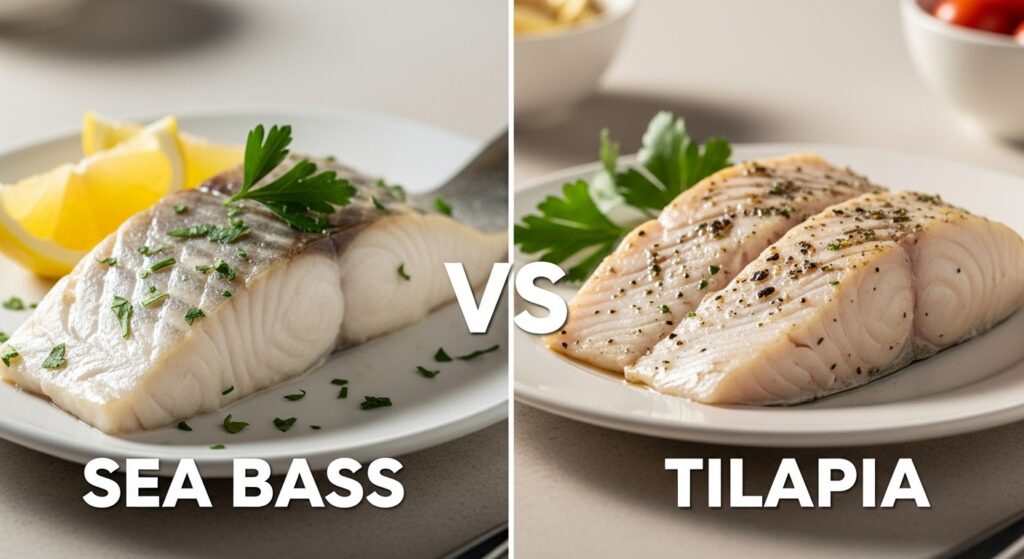
Branzino vs. Tilapia: Which Is Better
Quality perception:
- Branzino: Premium positioning, fine dining associations
- Tilapia: Budget category, mainstream appeal
Flavor:
- Branzino: Mild with character, subtle sweetness, ocean notes
- Tilapia: Very bland, almost no inherent flavor, neutral
Texture:
- Branzino: Firm, substantial flakes, good moisture
- Tilapia: Soft, can be mushy, benefits from careful cooking
Nutrition:
- Branzino: Higher omega-3s, better fatty acid ratio
- Tilapia: Very lean but minimal omega-3 content
Price:
- Branzino: $10-$15 per pound
- Tilapia: $4-$7 per pound (60% cheaper)
Farming:
- Branzino: Mediterranean farms with strong regulations
- Tilapia: Global farming, quality varies dramatically
The verdict: Branzino is objectively better quality—superior flavor, texture, and nutrition. However, tilapia’s 60% lower cost makes it practical for budget-conscious families. They’re not comparable in quality, only in being mild white fish.
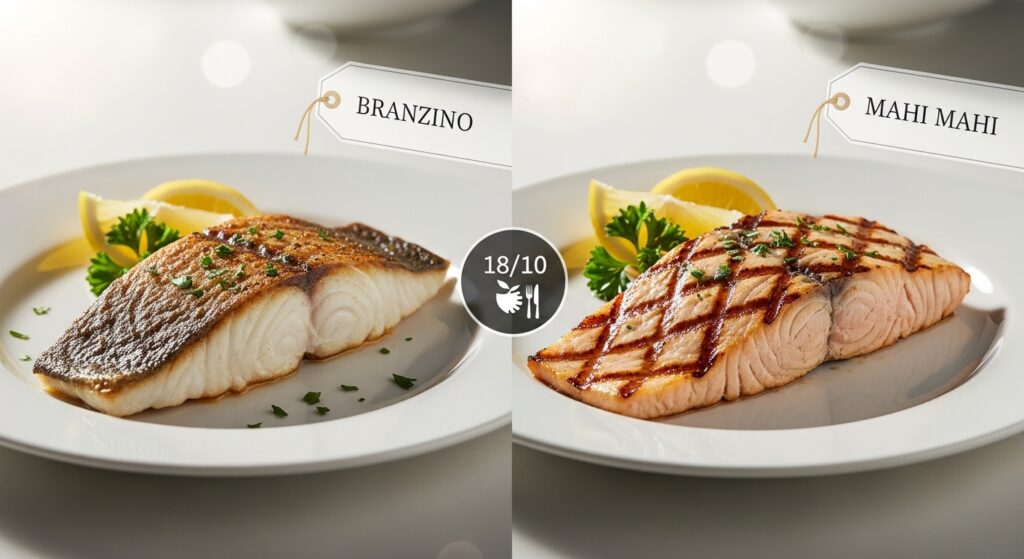
Branzino vs Mahi Mahi Taste
Flavor profile:
- Branzino: Delicate, mild, subtle sweetness, refined
- Mahi mahi: Moderately strong, slightly sweet, distinctive
Texture:
- Branzino: Firm, flaky, tender
- Mahi mahi: Very firm, meaty, steak-like
Fat content:
- Branzino: 2-3% (lean)
- Mahi mahi: 0.5-1% (very lean)
Cooking:
- Branzino: Delicate preparations, whole grilling, Mediterranean
- Mahi mahi: High-heat grilling, blackening, tropical preparations
Price:
- Branzino: $10-$15 per pound
- Mahi mahi: $10-$18 per pound
Flavor intensity: Mahi-mahi has 2-3x stronger flavor than branzino’s delicacy. Not good substitutes due to dramatic taste differences.
H2: Fine Dining Comparisons
Branzino vs Dover Sole Comparison
Both represent premium flatfish categories:
Origin:
- Branzino: Mediterranean round fish
- Dover sole: European flatfish (English Channel)
Flavor:
- Branzino: Mild, sweet, buttery undertones
- Dover sole: Extremely delicate, subtle, refined
Texture:
- Branzino: Firm, substantial flakes
- Dover sole: Ultra-delicate, fine grain, tender
Price:
- Branzino: $10-$15 per pound whole
- Dover sole: $28-$45 per pound (significantly more expensive)
Prestige:
- Branzino: High-end Mediterranean favorite
- Dover sole: Ultimate luxury, French fine dining classic
Preparation:
- Branzino: Bold preparations, grilling, roasting
- Dover sole: Gentle methods, meunière, poaching
Which is better? Dover sole represents the pinnacle of delicate fish but costs 2-3x more. Branzino offers excellent quality at a better value, though it lacks Dover sole’s legendary refinement.
H2: What Fish Is Similar to Branzino
Best Substitute for Branzino Fish
When branzino is unavailable, several alternatives provide similar experiences:
Tier 1 – Excellent Substitutes:
European Sea Bass (wild-caught):
- Identical species, different sourcing
- Slightly more pronounced flavor
- Perfect substitution ratio: 1:1
Striped Bass:
- Same family, similar characteristics
- Slightly larger, stronger flavor
- Substitution: Use smaller specimens or adjust portions
Mediterranean Sea Bream (Orata/Dorade
- Similar delicate flavor and texture
- Comparable size for whole presentations
- Very close Mediterranean cousin
Tier 2 – Good Substitutes:
Black Sea Bass:
- Different species but comparable delicacy
- Smaller size works for whole cooking
- Mild flavor profile similar
Red Snapper:
- Slightly firmer, nuttier flavor
- Works in branzino recipes with flavor adjustments
- Whole presentations work well
Rainbow Trout:
- Similar size for whole cooking
- Slightly earthier but mild
- Budget-friendly alternative
Tier 3 – Acceptable Substitutes:
Halibut
- Firmer, denser texture
- Works for fillets, not whole presentations
- More expensive but excellent quality
Cod:
- Much milder, softer texture
- Budget substitute for fillet recipes
- Won’t match branzino’s character
Arctic Char:
- Similar delicacy, slight pink color
- Comparable cooking methods
- Good whole fish alternative
Substitution Guidelines:
For whole grilled branzino: Use Mediterranean sea bream, striped bass, or rainbow trout
For branzino fillets, halibut, black sea bass, or red snapper work well
For Mediterranean recipes: European sea bass (wild), Mediterranean sea bream, or red snapper
Budget alternatives: Rainbow trout whole, cod fillets, or Arctic char
Key consideration: No substitute perfectly replicates branzino’s unique combination of mild sweetness, firm texture, and delicate flavor. Adjust cooking times and seasonings based on substitute characteristics.
Conclusion
The branzino fish comparison landscape reveals no universal “best” fish—each species excels in specific contexts. Branzino vs. salmon demonstrates lean delicacy versus rich omega-3 power. Branzino vs. cod shows premium refinement against budget-friendly versatility. Understanding the difference between branzino and Chilean sea bass, branzino vs. halibut, and what fish is similar to branzino empowers informed seafood selections. Whether determining if branzino is better than salmon for your health goals, finding the best substitute for branzino fish when shopping, or comparing branzino vs. tilapia, which is better for your budget, comprehensive analysis guides optimal choices matching culinary needs, nutritional priorities, and financial considerations.
Frequently Asked Questions
Q: Is branzino the same as sea bass? Yes, in Mediterranean and European contexts, branzino and sea bass are identical—both refer to European sea bass (Dicentrarchus labrax). However, “sea bass” describes many unrelated species globally, including Chilean sea bass, black sea bass, and white sea bass, which are completely different fish.
Q: Is branzino better than salmon? Neither is objectively better—they serve different purposes. Salmon provides 4-5x more omega-3s (2.0-2.6 g vs 0.4-0.6 g per 100 g) and richer flavor but higher calories (180-206 vs 97-120). Branzino offers lean protein, delicate taste, and lower calories. Choose based on nutritional goals and flavor preferences.
Q: What is the best substitute for branzino fish? The best branzino substitutes are Mediterranean sea bream (dorade), striped bass, or wild European sea bass for whole fish preparations. For fillets, use halibut, black sea bass, or red snapper. Budget alternatives include rainbow trout (whole) or cod (fillets).
Q: Branzino vs. tilapia: which is better? Branzino is objectively superior in flavor (subtle sweetness vs. bland), texture (firm flakes vs. soft), and nutrition (better omega-3 profile). However, tilapia costs 60% less ($4-7 vs. $10-15 per pound), making it practical for budget-conscious families despite lower quality.
Q: What fish tastes similar to branzino? Mediterranean sea bream (orata), striped bass, black sea bass, and halibut taste most similar to branzino. All offer a mild, slightly sweet flavor with firm, flaky white flesh. European sea bass (wild-caught) is identical since it’s the same species.
Q: What’s the difference between branzino and Chilean sea bass? Branzino is a Mediterranean fish, 1-1.5 pounds, mild and lean (2-3% fat), with a firm texture, and costs $10-15/pound. Chilean sea bass is an Antarctic deep-water fish, much larger, rich and buttery (13-16% fat), ultra-tender, and $25-35/pound. Completely different species despite both containing “bass” in their names.
Q: Can I use cod instead of branzino in recipes? Yes, cod substitutes adequately for branzino fillets in recipes, though expect milder flavor and softer texture. Cod costs less ($8-12 vs. $18-25 per pound for fillets), making it budget-friendly. Adjust cooking time as cod requires gentler handling to prevent mushiness.