
Basking Shark: The Gentle Giant of the Oceans
Introduction
The Basking Shark is the second-largest fish species on Earth, surpassed only by the Whale Shark. Typically measuring around 26 feet in length, some extraordinary individuals have been recorded at over 40 feet. Despite their immense size and intimidating appearance, basking sharks are entirely harmless to humans.
These giants are filter feeders, surviving exclusively on microscopic plankton. With their enormous mouths wide open, they can filter up to 2,000 tons of seawater per hour. Their name, “basking shark,” originates from their frequent behavior of swimming slowly near the ocean surface, giving the impression that they are basking in the sun—when in reality, they are feeding.
Basking Shark Size & Weight
Average vs. Maximum Dimensions
Basking sharks firmly belong to the category of marine megafauna. While they do not reach the colossal proportions of whale sharks, they are still among the largest creatures in the ocean.
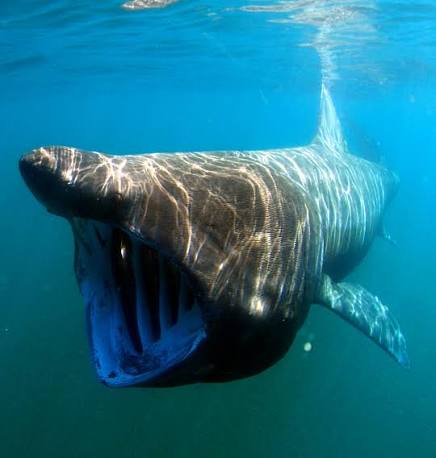
Typical Adult Measurements:
Average Length: 26 feet (≈ 8 meters)
Average Weight: 9,300 pounds (≈ 4,200 kg)
Maximum Recorded Size:
Largest Documented Length: 40.4 feet (≈ 12.3 meters)
Estimated Maximum Weight: Up to 36,000 pounds (≈ 16,000 kg)
The largest confirmed specimen was recorded in 1851 in Canada’s Bay of Fundy. Although historical reports sometimes exaggerated sizes up to 45 feet, modern scientific observations rarely encounter individuals exceeding 33 feet.
Habitat & Global Distribution
Where Do Basking Sharks Live?
Basking sharks inhabit a surprisingly wide range of marine environments across the globe. They are most commonly found in temperate oceans, where plankton is abundant.
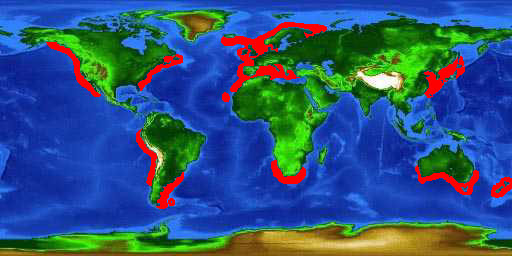
Two Primary Habitats:
Coastal Waters:
During spring and summer, basking sharks move closer to shorelines. These seasonal appearances coincide with plankton blooms, making them more visible to humans.
Deep Offshore Waters:
In winter, they migrate toward deeper oceanic zones, often near continental shelf edges. Here, they follow plankton that migrates vertically through the water column.
Notable Regions
North Atlantic Ocean (especially the Gulf of Maine)
Coastal waters of California
Temperate regions worldwide
Behavior & Temperament
Are Basking Sharks Dangerous?
Despite their massive size, basking sharks are completely non-aggressive and pose zero threat to humans. Their diet consists solely of plankton, and they lack any predatory behavior toward large animals.
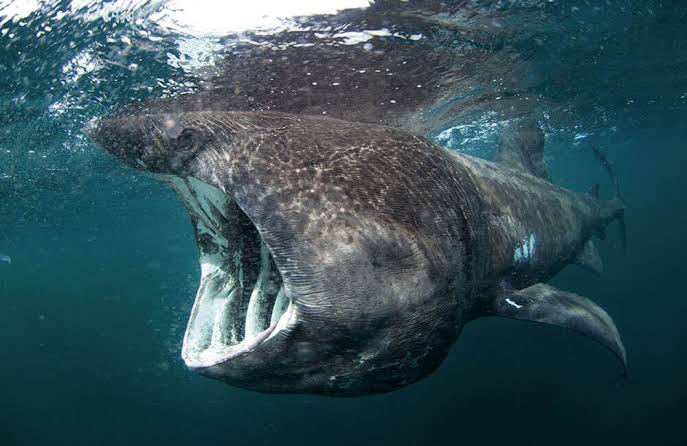
Key Behavioral Traits
Slow, energy-efficient swimming patterns
Passive filter-feeding with open mouths
Occasional breaching (leaping out of the water), still not fully understood
High tolerance for human presence
Their calm demeanor makes them one of the safest large marine animals to encounter.
Migration Patterns
Basking shark migration is one of the most fascinating yet least understood phenomena in marine biology. These sharks undertake long-distance journeys driven by food availability, water temperature, and possibly reproduction.
Key Migration Facts
Distance Range: 1,000 to 9,600 km
Longest Recorded Journey: ~9,589 km (British Isles to Newfoundland)
Speed: 1–3 mph (up to 5 mph max)
Depth Range: Surface to 1,264 meters
Tracking Duration: 165–479 days via satellite tags
Migration Strategies
Some remain local year-round
Others travel moderate distances
A few cross entire ocean basins
Interestingly, not all individuals follow the same migration routes, and scientists are still studying whether these patterns repeat annually.
Reproduction & Mysteries
Basking sharks are known for their exceptionally long gestation period, believed to be among the longest in the animal kingdom (possibly up to 2–3 years). However, due to limited observations, much about their reproductive biology remains a mystery.
Conservation Status
Are Basking Sharks Endangered?
Yes, basking sharks are currently listed as Endangered by the International Union for Conservation of Nature.
Major Threats
Historical overfishing (for liver oil and fins)
Bycatch in commercial fishing
Climate change affecting plankton availability
Slow reproductive rate
Global Conservation Efforts
Legal protections in the UK, USA, and Canada
Marine conservation programs and research initiatives
Satellite tracking to better understand behavior and migration
Protecting basking sharks is crucial not only for biodiversity but also for maintaining the balance of marine ecosystems.
Conclusion
The basking shark stands as one of nature’s most extraordinary yet misunderstood giants. With its immense size, gentle temperament, and mysterious lifestyle, it continues to captivate scientists and ocean enthusiasts alike. From filtering thousands of tons of water daily to migrating across vast oceanic distances, this species embodies both the beauty and complexity of marine life.