
Imagine driving on a ribbon of asphalt that seems to float over the open sea, with waves crashing just meters away and panoramic views of the raw Norwegian coastline at every turn. This is the Atlantic Ocean Road, a route so spectacular it’s often called the world’s most beautiful drive. It’s an experience that feels less like a commute and more like soaring over the ocean itself. This stunning highway is a marvel of engineering, known for its dramatic coastal scenery, sharp turns, and breathtaking bridges. While many people might search for the Atlantic Ocean on a map to pinpoint vast stretches of water, like the warmer coast of Lanzarote, the Atlantic Ocean Road offers a uniquely intimate and powerful encounter with its northern edge. This guide will help you plan your journey along this iconic route. We’ll explore what makes the road so special, highlight key sights along the way, and provide practical tips to make your trip unforgettable.
What is the Atlantic Ocean Road?
The Atlantic Ocean Road (or Atlanterhavsvegen in Norwegian) is a 5.2-mile (8.3-kilometer) section of County Road 64 in Norway’s Møre og Romsdal county. It connects the island of Averøy to the mainland via an archipelago of small islands and skerries. Its construction is a testament to human ingenuity, featuring eight magnificent bridges that leapfrog across the turbulent waters of the Norwegian Sea.
Opened in 1989 after six years of challenging construction, the road was voted Norway’s “Engineering Feat of the Century.” It has since been designated as a National Tourist Route, cementing its status as a must-see destination.
Key facts about the road include:
- Length: 5.2 miles (8.3 km)
- Location: Møre og Romsdal county, Norway
- Bridges: 8 in total
- Opened: 1989
- Designation: National Tourist Route
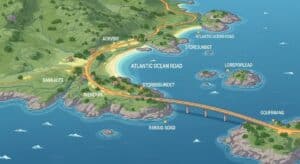
Your Guide: A Map of the Atlantic Ocean Road
The road is part of the scenic drive between the towns of Kristiansund and Molde. While the famed section is relatively short, the entire route offers spectacular views and several worthwhile stops.
[Simplified map of the Atlantic Ocean Road showing the route between Kristiansund and Molde, highlighting Storseisundet Bridge, Eldhusøya, and Håholmen.]
Storseisundet Bridge: The “Drunk” Bridge
The most famous and most photographed part of the drive is the Storseisundet Bridge. Known as the “drunk bridge” or “the road to nowhere,” its unique architecture creates a dramatic optical illusion. From a specific angle, the bridge appears to ascend sharply before dropping off directly into the sea. This stunning visual trick makes for an incredible photo opportunity and a thrilling part of the journey.
Eldhusøya Viewpoint: The Floating Walkway
For a chance to stretch your legs and soak in the 360-degree views, stop at the Eldhusøya viewpoint. An elevated, circular walking path, known as the “floating walkway,” weaves around the tiny island. This 1,800-foot loop provides panoramic vistas of the road, the bridges, and the vast ocean. There’s also a service building with a café and restrooms, making it a perfect pit stop.
Håholmen: A Historic Fishing Village
To get a feel for the region’s rich history, take a short boat trip from Geitøya island to Håholmen. This beautifully preserved 17th-century fishing village offers a glimpse into the traditional coastal culture of Norway. You can explore the historic buildings, learn about the area’s fishing heritage, and even stay overnight in one of the rustic rorbu (fisherman’s cabins).
Best Time to Visit and Driving Tips
The Atlantic Ocean Road offers a different kind of magic in every season.
Summer (June-August): This is the most popular time to visit. You’ll enjoy long daylight hours, milder weather, and calmer seas. It’s the ideal season for leisurely drives, photography, and enjoying the viewpoints without battling harsh winds.
Autumn/Winter (September-March): For a more dramatic and raw experience, consider a trip in the autumn or winter. This is when storms roll in from the Atlantic, sending massive waves crashing over the bridges. The scenery is wild and unforgettable, but it demands caution. Always check weather forecasts and road conditions before setting out.
To make the most of your drive, here are a few practical tips:
- Drive slowly. The road is short, so there’s no need to rush. Take your time to enjoy the views and use the designated stopping points.
- Be aware of others. The road is popular with cyclists and pedestrians, especially in the summer. Share the road and be vigilant.
- Exercise caution during storms. If you’re visiting during a storm, be prepared for waves to splash onto the road. Drive with extreme care and never stop on the bridges.
- Allow plenty of time. To fully experience the road and its surrounding attractions, set aside at least half a day. This will give you time for stops, photos, and perhaps a side trip to Håholmen.
Frequently Asked Questions (FAQs)
Where is the Atlantic Ocean Road?
The Atlantic Ocean Road is located on the western coast of Norway in the county of Møre og Romsdal. It is a section of County Road 64, which connects the towns of Kristiansund and Molde.
Where is the Atlantic Ocean located?
The Atlantic Ocean is the world’s second-largest ocean, separating the continents of the Americas from Europe and Africa. You can see its vast expanse on any world map. While the ocean stretches from the Arctic to the Antarctic, the Atlantic Ocean Road offers a unique chance to experience its rugged northern coast up close.
An Unforgettable Norwegian Journey
The Atlantic Ocean Road is far more than just a way to get from one point to another; it’s an architectural and natural wonder that delivers an unforgettable driving experience. It’s a place where you can feel the raw power of nature and admire the bold vision of its creators.
Whether you drive it under the calm midnight sun of summer or during a dramatic autumn storm, the journey is bound to leave a lasting impression. This epic road trip is a true bucket-list adventure.
Have you driven the Atlantic Ocean Road? Share your experiences and tips in the comments below!.