
The word “shark” often conjures images of powerful predators and deep-sea danger. It’s a reputation largely built by Hollywood and thrilling nature documentaries. But what if I told you the ocean’s largest fish, a true giant of the deep, is one of the most peaceful creatures you could ever hope to meet? So, are whale sharks dangerous to humans? The short and simple answer is no. Despite their massive size, these magnificent animals are known as “gentle giants” for a very good reason. They pose no significant threat to people. In fact, swimming alongside one is often described as a peaceful, almost spiritual experience. This article will explore the fascinating world of the whale shark. We will look at what makes them so different from their predatory relatives, examine their calm temperament, and review historical accounts of whale shark-human interaction. We’ll also provide essential safety guidelines for anyone lucky enough to swim with these incredible creatures, ensuring both your safety and their protection.
What makes whale sharks different from other sharks?
The primary reason whale sharks are harmless is their diet and how they eat. Unlike predatory sharks, such as the great white or tiger shark, whale sharks are filter feeders. They are one of only three known filter-feeding shark species, along with the basking shark and the megamouth shark.
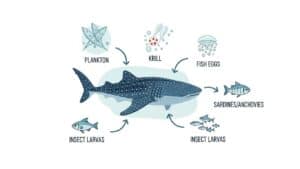
Their feeding method is a beautiful, passive spectacle. They swim slowly through the water with their enormous mouths wide open, sometimes up to four feet wide. As they move, they suck in huge volumes of water filled with their favorite foods: plankton, krill, small fish, and fish eggs. A specialized filtration system, made of gill rakers, acts like a sieve, trapping the food while the water flows out through their gills. They don’t hunt, chase, or attack prey. They simply glide and gather.
Let’s compare them to the sharks you might see in a thriller movie:
- Diet: Whale sharks consume tiny marine organisms. Predatory sharks, on the other hand, hunt large prey like seals, sea lions, and big fish.
- Teeth: A whale shark’s teeth are tiny and non-functional, totaling more than 3,000 but measuring only a few millimeters long. They play no role in feeding. In contrast, predatory sharks have large, razor-sharp teeth designed for tearing flesh.
- Behavior: Whale sharks are generally slow-moving, docile, and placid. Predatory sharks are built for speed and aggression, using powerful bursts of energy to catch their meals.
Quick Facts
Scientific Name: Rhincodon typus
Average Size: 18 to 33 feet (6 to 10 meters), but can grow up to 60 feet.
Diet: Filter Feeder (plankton, krill, small fish, fish eggs).
Conservation Status: Endangered.
Understanding whale shark behavior toward humans
So, if they aren’t hunters, are whale sharks dangerous? The answer is a clear no. Aggression is virtually unheard of in this species. The typical whale shark temperament is best described as calm, curious, and sometimes even seemingly playful.
Divers and marine biologists who have spent countless hours with them describe a serene and gentle disposition. They often appear indifferent to humans, continuing their slow, graceful swim as people watch in awe. I’ve had the privilege of swimming with them in the Philippines and Mexico, and each encounter has been breathtakingly peaceful. I remember one particular moment off the coast of Isla Mujeres, where a young whale shark, about 20 feet long, swam directly toward our group. There was no menace, just a slow, deliberate curiosity. It passed within feet of us, its massive eye calmly observing us before it glided away into the blue. It was a humbling experience that erased any lingering fear associated with the word “shark.”
Any recorded “incidents” involving whale sharks and humans are almost always accidental. Due to their enormous size and somewhat clumsy maneuverability at slow speeds, an unintentional bump is possible. A swimmer who gets too close might receive a gentle nudge from a fin or an accidental swipe from the powerful tail. These are not attacks but simply the result of sharing a small space with a very large animal.
For centuries, sailors and divers have documented encounters with these creatures. There are very few negative incidents recorded in all that time, which is a powerful testament to their peaceful nature. This long history of positive whale shark-human interaction reinforces their reputation as the ocean’s gentle giants.
Is it safe to swim with whale sharks? Debunking the myths
For adventurers and ocean lovers, this is the ultimate question: Is it safe to swim with whale sharks? Yes, it is incredibly safe, as long as you follow established guidelines and treat the animals with respect. Every year, thousands of tourists travel to destinations like Mexico, the Philippines, and Australia for the chance to swim with them, and these encounters are overwhelmingly positive.
One common myth that causes hesitation is the fear of a whale shark bite. While their mouths are massive, they are not designed for biting or attacking. The idea of a whale shark intentionally biting a human is biologically impossible for them. Their throat is only about the size of a quarter, meaning they couldn’t swallow a person even if they tried. A “bite” would be accidental, perhaps if a person were directly in the path of a feeding shark and got suctioned against its mouth. This is extremely unlikely and would not cause serious injury.
The real, albeit minimal, risks associated with swimming with whale sharks come from their sheer size. An accidental tail swipe could knock a person off balance, and getting too close could put you in a position to be bumped. However, these risks are easily managed by following the safety rules provided by responsible tour operators. The biggest danger isn’t to humans, but from humans to the whale sharks. Irresponsible tourism can stress the animals, disrupt their feeding, and even cause injury from boat propellers or tourists touching them.
Essential whale shark swimming guidelines for your safety
To ensure a safe and respectful encounter, it’s crucial to follow established whale shark safety tips. These rules are designed to protect both you and these endangered creatures. When you book a tour, a reputable guide will brief you on these guidelines, and you must listen and adhere to them.
How to behave around whale sharks
- Maintain a safe distance: Always stay at least 10 feet (3 meters) away from the whale shark’s head and 13 feet (4 meters) away from its tail. This gives the animal space and keeps you clear of its powerful tail fin.
- Do not touch or ride the whale shark: Touching a whale shark can remove its protective mucous layer, making it vulnerable to infection. Attempting to ride one is not only dangerous but also incredibly stressful for the animal.
- Approach from the side: Never swim directly in front of a whale shark or block its path. The best way to approach is from the side, parallel to its direction of travel. This allows the shark to see you and prevents you from startling it.
- No flash photography: The sudden bright light from a camera flash can startle or disorient whale sharks. Keep your flash turned off.
- Listen to your tour guide: Your guide is an expert on local conditions and animal behavior. Their instructions are your best resource for a safe and memorable experience.
- Move calmly and quietly: Avoid splashing, making sudden movements, or yelling. Calm behavior helps keep the whale shark relaxed.
Following these whale shark swimming guidelines not only ensures your safety but also contributes to the conservation of this magnificent species by promoting responsible and sustainable tourism.
Frequently Asked Questions (FAQs)
Do whale sharks attack people?
No, there are no verified records of a whale shark ever attacking a human. They are completely harmless filter feeders and do not view humans as a food source.
Are whale sharks friendly?
While “friendly” is a human emotion, whale sharks are often curious and non-aggressive. They seem tolerant of human presence and will often allow swimmers to get relatively close without showing any signs of distress, as long as the swimmers are respectful.
What is the biggest danger when swimming with a whale shark?
The biggest risk is an unintentional collision. Because of their immense size, an accidental bump or tail swipe is possible if you get too close. This is why following the whale shark swimming guidelines and maintaining a safe distance is so important.
1. Are whale sharks dangerous to humans?
No, whale sharks are not dangerous to humans. They are gentle filter feeders and rarely show aggressive behavior.
2. Has a whale shark ever attacked a human?
There are no confirmed cases of whale sharks attacking humans. Their behavior is calm and non-aggressive.
3. Is it safe to swim with a whale shark?
Yes, swimming with whale sharks is generally safe as long as you follow guidelines like maintaining distance and not touching them.
4. Can a whale shark accidentally hurt you because of its size?
Yes, due to their massive size and tail movement, accidental contact can cause injury, but it’s unintentional.
5. Do whale sharks have teeth? Can they bite?
Whale sharks have thousands of tiny teeth, but they don’t use them to bite or hunt. They only filter feed.
6. Are whale sharks friendly toward humans?
They’re not “friendly,” but they are curious and calm, often approaching divers without aggression.
7. What should you avoid when swimming with a whale shark?
Avoid touching, blocking its path, swimming near its mouth, or getting close to its tail.
8. Why are whale sharks considered harmless?
Because they feed on plankton, have gentle behavior, and avoid confrontation.
9. Do whale sharks mistake humans for food?
No, whale sharks feed on tiny organisms and do not confuse large objects like humans for food.
10. Can whale sharks swallow a human?
No. Their throat is extremely narrow — roughly the size of a coin — so swallowing a human is impossible.
A gentle giant worth protecting
The evidence is clear: whale sharks are not dangerous to humans. Their filter-feeding biology, docile whale shark temperament, and centuries of peaceful coexistence with people confirm their status as gentle giants. Swimming with them is a safe, awe-inspiring activity that connects us with the wonders of the marine world.
However, safety and respect must go both ways. As an endangered species, whale sharks face numerous threats from boat strikes, marine pollution, and habitat loss. Responsible tourism is not just about keeping humans safe; it’s about protecting these incredible animals for generations to come.
By choosing ethical tour operators and following safety guidelines, we can ensure that our encounters have a positive impact. So, the next time you hear the word “shark,” remember the peaceful, plankton-eating giant that gracefully roams our oceans. They are a powerful reminder that the biggest creatures are often the most gentle.
Have you ever had a whale shark human interaction? Share your experience or any questions in the comments below!