
Introduction
Planning basking shark tours offers wildlife enthusiasts the adventure of a lifetime. These gentle giants create unforgettable encounters through basking shark boat tours, swimming experiences, and dedicated watching expeditions worldwide. From Scotland’s legendary waters to Canada’s pristine Atlantic coast, ecotourism basking shark encounters combine thrilling wildlife viewing with conservation education. This guide reveals the best basking shark tour operators, explains how to see basking sharks safely, and covers everything from booking strategies to seasonal timing. Whether you’re seeking swimming with basking sharks or comfortable boat-based viewing, discover the perfect basking shark watching tours for your dream marine wildlife adventure today.
Scotland Tour Excellence
Inner Hebrides Adventures
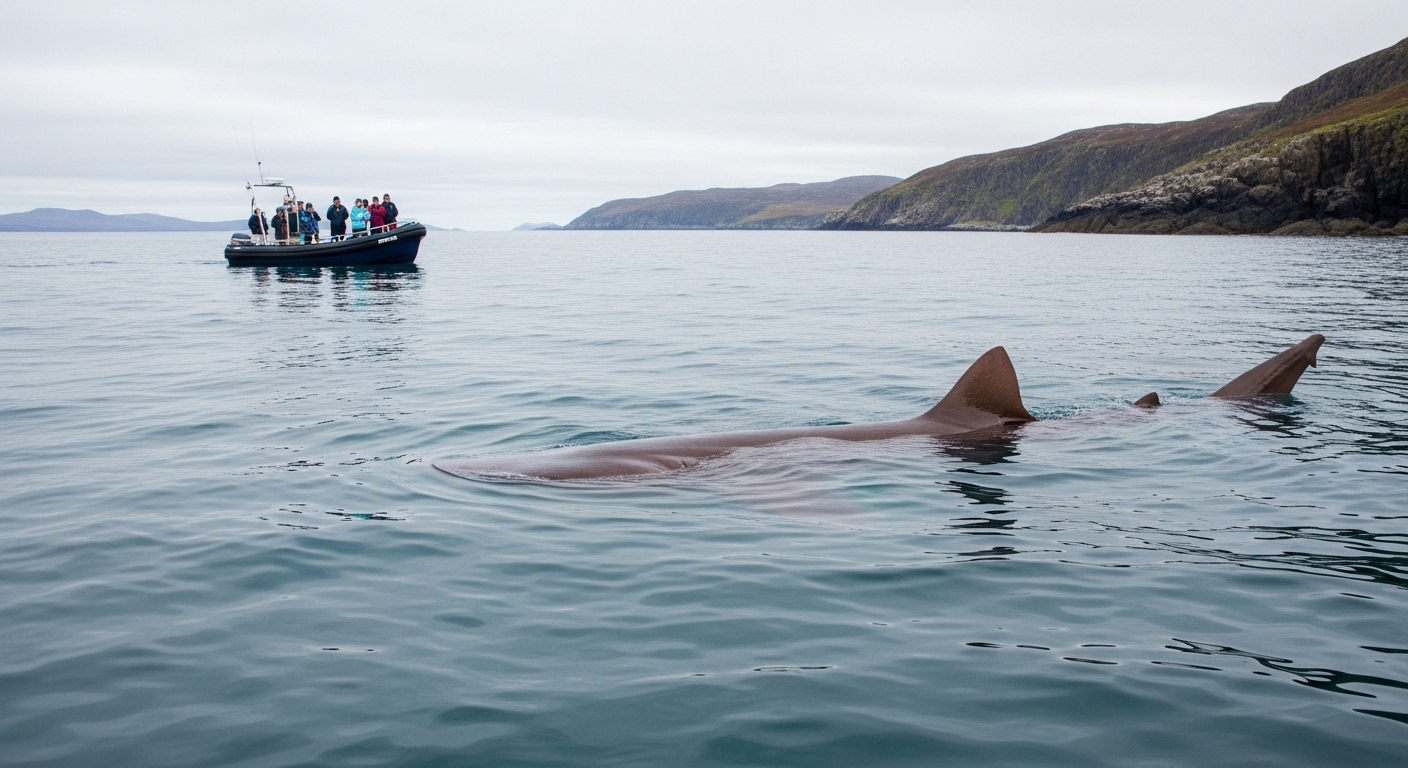
Scotland basking shark boat tours dominate global ecotourism offerings. The Inner Hebrides, particularly around the Isle of Mull, Oban, and Tobermory, provides world-class experiences with 80-90% success rates during peak season. The Sea of the Hebrides Marine Protected Area safeguards critical feeding grounds where sharks congregate reliably from May through September.
Top-rated operators include Basking Shark Scotland, SeaLife Surveys, and Mull Charters. These professional businesses employ marine biologist guides who share fascinating insights while navigating to proven hotspots. Tours typically last 3-6 hours, departing early morning when conditions remain calmest and sharks most active.
The dramatic Highland scenery creates spectacular backdrops for photography. Crystal-clear waters allow underwater visibility revealing sharks’ massive gill slits and graceful movements. Many operators use small zodiac vessels accommodating 6-12 passengers, ensuring intimate, personalized experiences impossible on larger boats.
Prices range £60-120 for half-day trips, with full-day expeditions costing £150-250. Peak season (June-August) requires booking 2-3 months advance. Shoulder months (May, September) offer availability flexibility and often reduced rates while maintaining strong sighting probabilities.
West Coast Operators
Beyond the Inner Hebrides, Scotland’s west coast supports numerous basking shark tour operators. The Firth of Clyde, Sound of Jura, and waters around Skye provide consistent encounters with easier mainland access. Operators in Ayr, Largs, Ullapool, and Gairloch serve travelers seeking alternatives to island-based services.
These less-crowded waters deliver excellent success rates while avoiding peak tourist concentrations. Local operators possess decades of experience reading conditions, predicting shark movements, and maximizing guest satisfaction through expert navigation and interpretation.
Canadian Atlantic Experiences
Nova Scotia Excellence
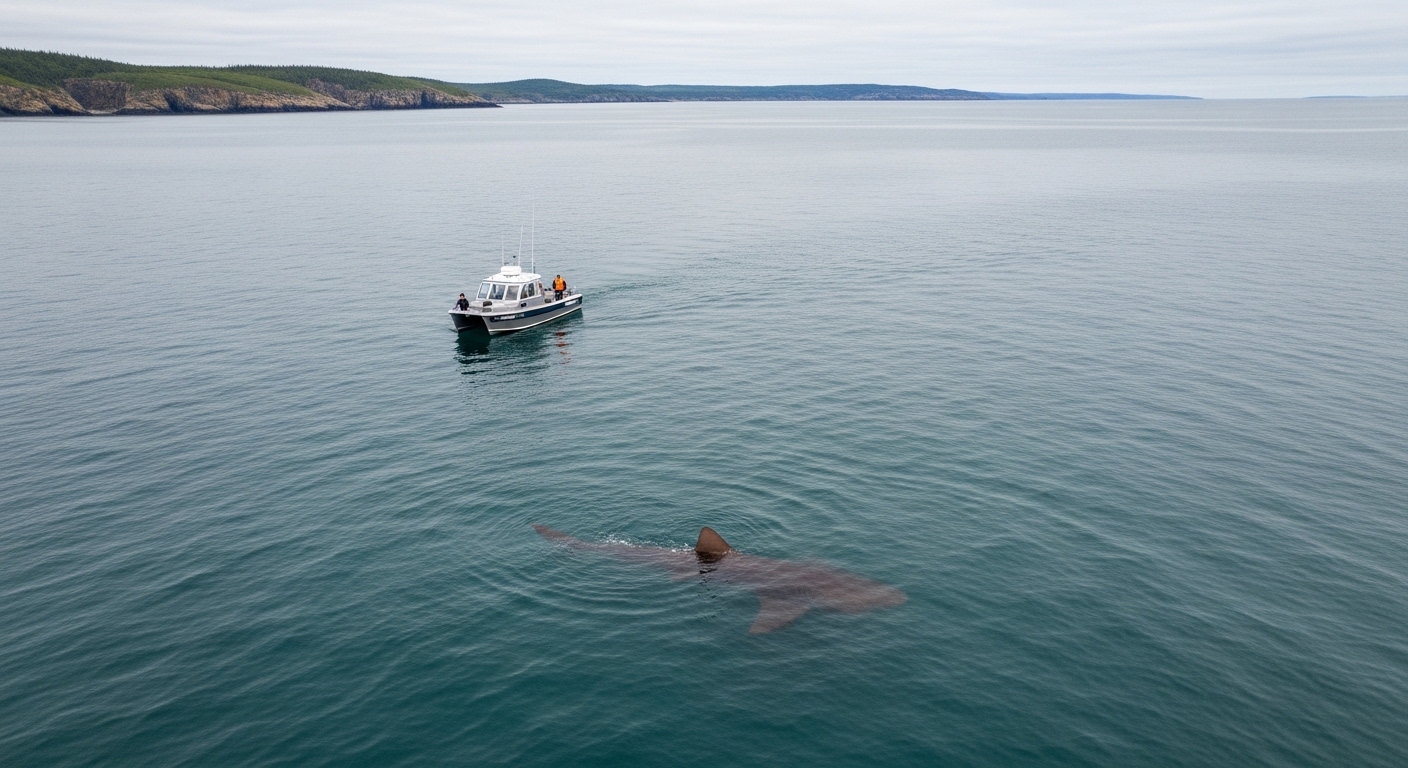
Nova Scotia basking shark tours showcase Atlantic Canada’s marine richness. The province’s extensive coastline from the Bay of Fundy to the Eastern Shore supports healthy populations appearing predictably from June through October. Tours often combine whale watching (finback, humpback, minke) with shark encounters, creating comprehensive marine wildlife experiences.
Premier operators include Mariner Cruises (Brier Island), Ocean Explorations (Tiverton), and Pleasant Bay Whale & Seabird Tours (Cape Breton). These businesses emphasize education and conservation, employing knowledgeable guides who explain basking shark biology, behaviors, and protection needs.
The Bay of Fundy’s legendary tides generate extraordinary productivity. Tidal exchanges reaching 16 meters create plankton blooms visible from the surface, attracting basking sharks in significant numbers. Brier Island serves as the primary departure point, offering access to offshore feeding grounds within minutes.
Pricing typically ranges $70-110 CAD for 2-3 hour trips, $130-200 for extended expeditions. Multi-species focus ensures valuable experiences even during slower basking shark activity periods. The authentic maritime hospitality and uncrowded waters appeal to travelers seeking genuine, unhurried encounters.
East Coast Options
New Brunswick and Prince Edward Island provide emerging basking shark watching tours. While less concentrated than Nova Scotia hotspots, these regions offer pristine waters and personalized service from operators like Fundy Tide Runners and PEI Coastal Tours.
Canadian operators prioritize safety and environmental responsibility. Weather in Atlantic Canada changes rapidly—understanding flexible cancellation policies prevents disappointment. Most businesses reschedule rather than refund weather cancellations, accommodating multi-day visitors effectively.
USA Charter Options
New England Excellence
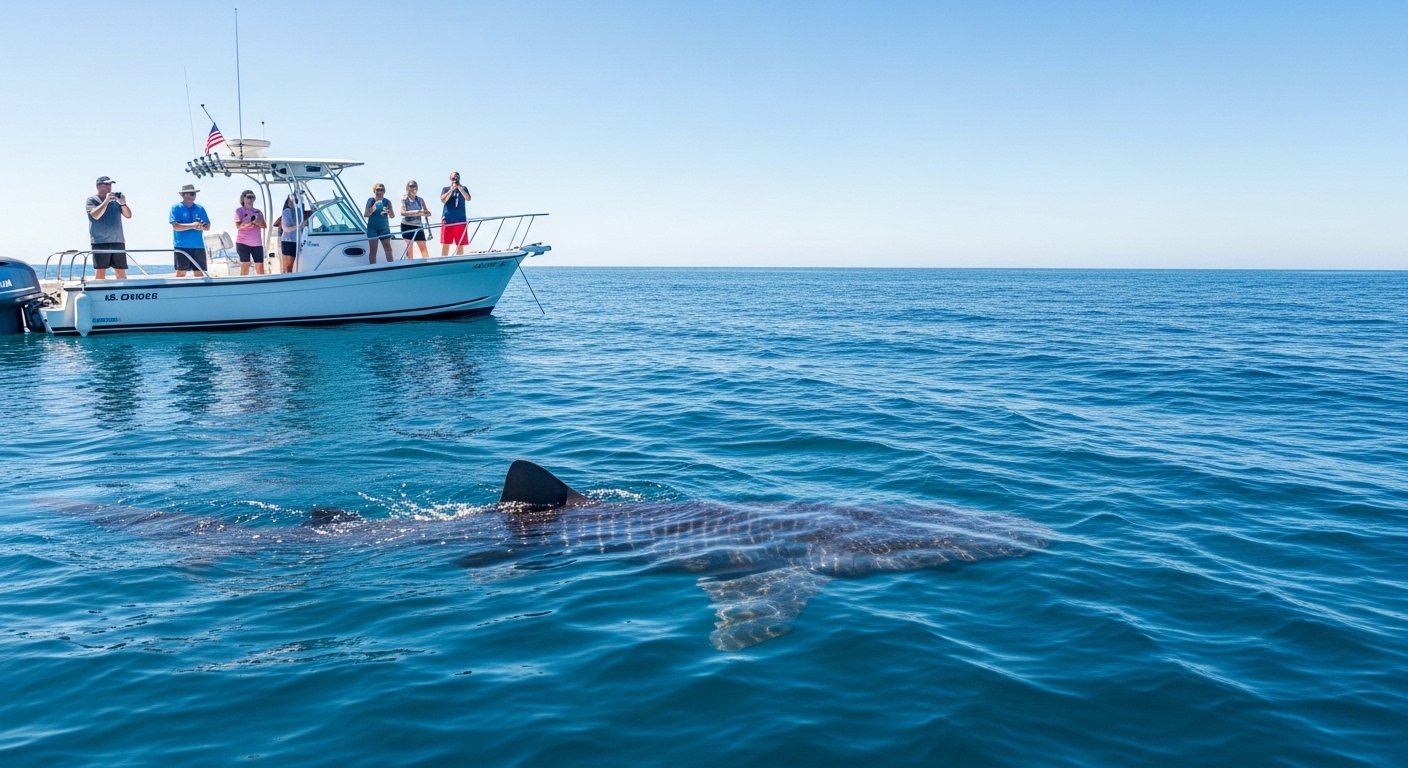
New England basking shark charters concentrate in Massachusetts and Maine waters. The Gulf of Maine’s productivity rivals any global hotspot during peak season (May-October). Tours often incorporate whale watching, creating diverse marine mammal experiences from single outings.
Leading Massachusetts operators include Cape Cod Bay Cruises (Provincetown), Stellwagen Bank Charters (Boston), and Captain John Boats (Plymouth). Stellwagen Bank National Marine Sanctuary provides protected feeding grounds with regulated approach distances ensuring sustainable tourism practices.
Maine’s extensive coastline supports numerous operators departing from Bar Harbor, Portland, and Kennebunkport. Bar Harbor Whale Watch, First Chance Whale Watch, and Odyssey Whale Watch feature smaller vessels delivering personalized experiences. The rugged coastline and lighthouse-dotted scenery enhance overall adventure quality.
Prices range $50-80 for 3-4 hour trips, $100-150 for extended half-day expeditions. Many operators provide “sighting guarantees” with complimentary return trips if target species aren’t encountered. Peak season weekends book months ahead—weekday options offer better availability.
California Pacific Tours
West Coast options operate from Monterey Bay and Half Moon Bay, offering year-round opportunities with spring through fall providing optimal conditions. Monterey Bay Whale Watch and Sanctuary Cruises emphasize the National Marine Sanctuary’s incredible biodiversity.
Pacific tours frequently feature blue whales, humpbacks, orcas, dolphins, and sea otters alongside basking sharks. The comprehensive marine life encounters justify California’s premium positioning among global wildlife tourism destinations.
Irish Wild Encounters
Atlantic Way Tours
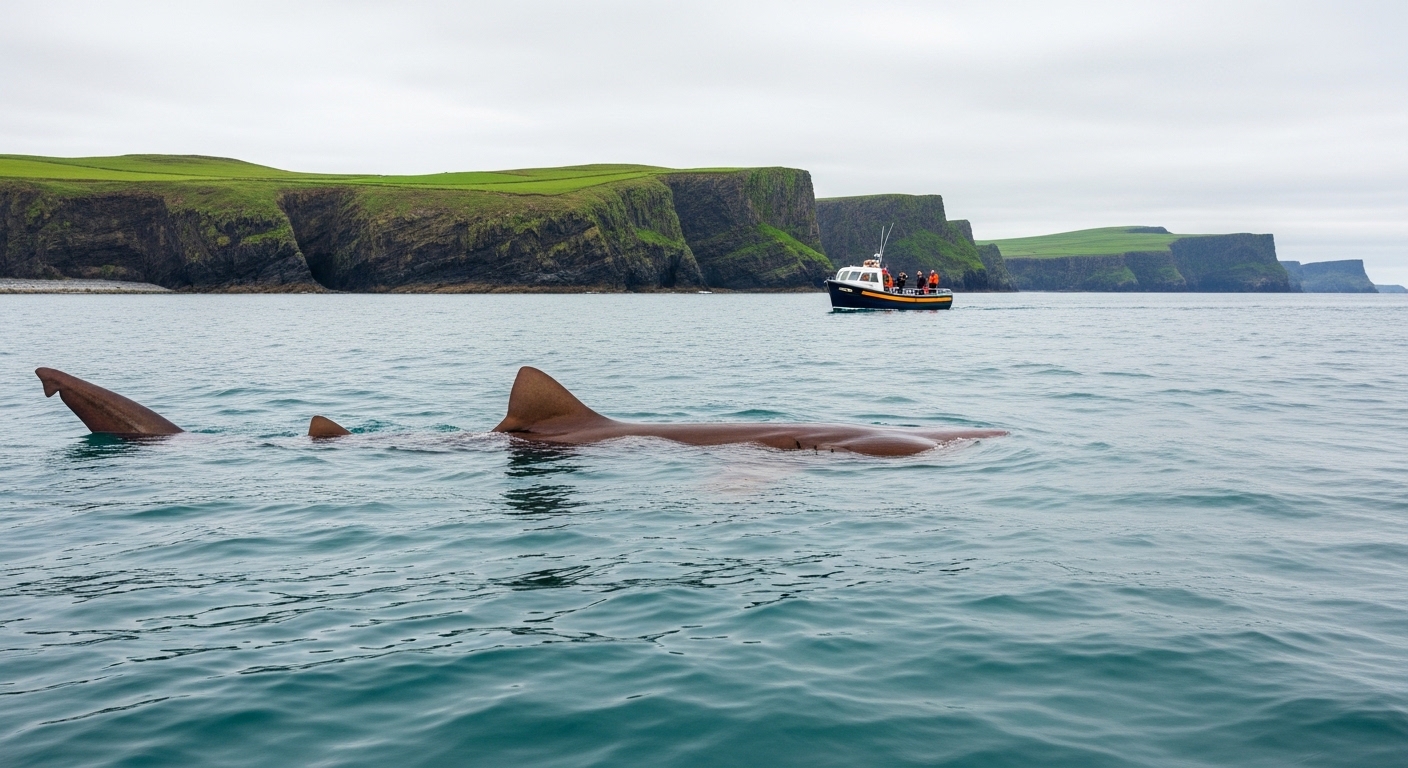
Irish basking shark swimming tours operate along the dramatic Wild Atlantic Way coastline. Counties Kerry, Cork, Clare, and Donegal offer pristine waters supporting seasonal populations from May through September. Ireland pioneered ethical swimming protocols now adopted globally.
Respected operators include Dingle Sea Safari (Kerry Peninsula), Marine Dimensions (Kenmare Bay), and Inishbofin Island Discovery (Galway). These businesses combine basking shark encounters with Celtic history, traditional music, and authentic hospitality, creating comprehensive Irish adventures.
The southwest corner provides Ireland’s most consistent sightings. The Blasket Islands, Dingle Peninsula, and Skellig Michael areas attract sharks to nutrient-rich upwelling zones. Conservation leadership makes Ireland ideal for conscientious travelers prioritizing ethical wildlife interactions.
Prices range €70-110 for standard tours, €130-200 for extended expeditions. Swimming experiences command premium rates (€160-280) reflecting specialized equipment, permits, and guide expertise requirements. Multi-day packages incorporating accommodations and land tours create seamless experiences.
Tour Types Explained
Boat-Based Viewing
Basking shark boat tours represent the most accessible viewing method. Professional operators navigate to feeding grounds where sharks congregate predictably during peak season. Tours last 2-6 hours, with zodiac-style boats providing maneuverability and low-profile perspectives ideal for photography.
Expert guides share biological insights, conservation stories, and identification techniques throughout journeys. Many tours incorporate hydrophone listening, allowing passengers to hear underwater soundscapes. The educational component transforms sightings into comprehensive marine biology lessons.
Success rates typically reach 70-90% during peak months in established hotspots. Multiple encounters per trip are common. Some operators offer sighting guarantees, providing return trips if sharks aren’t encountered during initial outings.
Swimming Experiences
Swimming with basking sharks creates profoundly intimate encounters. Specialized tours in select locations permit controlled in-water experiences following strict ethical guidelines. Participants wear wetsuits, snorkeling equipment, and flotation devices under expert supervision.
The underwater perspective reveals incredible details—massive gill slits filtering plankton, textured skin patterns, and graceful movement mechanics. Many participants describe these as life-changing experiences fostering deep ocean conservation connections.
Not all regions permit swimming with basking sharks. Regulations vary significantly, with some countries prohibiting in-water interactions entirely. Always verify local laws and choose operators with proper authorization and demonstrated conservation commitments.
Research Expeditions
Some organizations offer citizen science basking shark tours combining tourism with conservation contributions. Participants assist researchers with photo-identification, behavioral observations, and data recording throughout extended expeditions.
These programs typically last full days or multi-day formats, providing deeper immersion into basking shark ecology. Scientists explain research methodologies, share unpublished findings, and discuss conservation challenges. The data collected genuinely contributes to scientific understanding and population monitoring.
Choosing Operators Wisely
Safety Standards Matter
The best basking shark tour operators maintain rigorous safety standards exceeding minimum requirements. Look for vessels with current certifications, proper insurance, modern navigation equipment, adequate life jackets, and experienced crew with first aid training.
Reputable operators conduct thorough pre-departure safety briefings covering emergency procedures, equipment locations, and communication protocols. They monitor weather continuously and won’t hesitate canceling trips when conditions deteriorate, prioritizing passenger safety over commercial pressure.
Conservation Commitment
Top operators actively support conservation through research participation, education programs, and sustainable practices. Look for businesses contributing sighting data to scientific databases, employing marine biologists as guides, or donating percentages to conservation organizations.
Operators emphasizing education over entertainment typically provide superior experiences. Their passion for marine protection translates into meaningful interpretations, ethical encounters, and lasting impacts on participants’ environmental awareness and advocacy.
Reviews and Reputation
Research operator reputations through multiple sources before booking. TripAdvisor, Google Reviews, and specialized wildlife tourism forums reveal consistent patterns. Pay attention to comments about guide knowledge, vessel conditions, wildlife respect, and handling disappointing outings.
Recent reviews matter more than dated feedback since operations change ownership, staff, and standards over time. Focus on experiences from the current season or previous year for relevant insights into operator quality.
Seasonal Timing Strategy
Peak Season Advantages
Booking during peak season (June-August across most regions) offers maximum success probability. Shark concentrations reach annual highs, weather stabilizes, and plankton blooms intensify. Multiple encounters per trip become standard rather than exceptional.
Operator experience levels peak during these months too. Guides know current hotspots precisely, having spent weeks observing patterns. The accumulated seasonal knowledge translates into superior guest experiences and higher satisfaction rates.
Shoulder Season Benefits
May and September provide attractive alternatives for budget-conscious or crowd-averse travelers. Prices often drop 20-40% compared to peak months. Vessels carry fewer passengers, creating more intimate experiences with greater guide attention.
Shark activity remains strong during shoulder periods, though sighting frequencies may decrease slightly. The tradeoff between certainty and value appeals to flexible travelers. Weather becomes more variable—building extra days into itineraries compensates effectively.
Multi-Day Strategies
Single-day tours risk weather cancellations or slow activity periods. Multi-day visits dramatically increase success probability through multiple attempts. Book 2-3 separate tour days allowing weather flexibility and maximizing shark encounter opportunities.
Some operators offer multi-day packages with accommodation partnerships, creating seamless experiences while reducing per-day costs. The immersion deepens appreciation and learning beyond single-encounter snapshots, fostering meaningful connections with marine ecosystems.
Safety Protocols Explained
In-Water Guidelines
Swimming with basking sharks requires following strict protocols protecting participants and wildlife. Never touch sharks, avoid blocking swimming paths, maintain minimum separation distances (typically 3-5 meters), and limit time with individual animals.
Guides assess water conditions, visibility, and shark behavior before permitting entries. They continuously monitor situations, directing swimmers away if sharks show avoidance behaviors. Professional operations never force interactions—all encounters remain voluntary from both parties.
Environmental Awareness
Safe ocean encounters with basking sharks include environmental consciousness. Avoid wearing sunscreen containing harmful chemicals (use reef-safe alternatives), secure all equipment preventing losses, never attempt feeding, and report unusual shark behaviors to guides immediately.
Understanding hypothermia risks in cold waters matters critically. Proper wetsuits, limiting exposure times, and recognizing early symptoms prevents dangerous situations. Listen to guide recommendations about duration and exertion levels throughout experiences.
What to Expect
Typical Tour Timeline
Standard tours follow predictable formats. Arrive 15-30 minutes before departure for check-in and equipment distribution. Pre-departure briefings cover safety, wildlife protocols, and the day’s plan. Transit to feeding grounds takes 15-60 minutes depending on departure point proximity.
Active searching involves systematic scanning of productive areas. Guides communicate sightings via radio networks with other operators, increasing success probability. Once sharks are located, vessels position carefully for optimal viewing without disturbance.
Encounters vary from brief sightings to extended observations lasting 15-30 minutes with individual sharks or groups. Guides provide running commentary identifying behaviors, answering questions, and sharing conservation information. Photography time is generally ample throughout successful outings.
Weather Dependency Reality
All basking shark tours operate weather-dependent. Wind, waves, visibility, and even excessive sunshine affect feasibility and success. Operators prioritize safety over income—cancellations, while disappointing, demonstrate professionalism and appropriate risk management.
Understand refund versus rescheduling policies before booking. Most operators prefer rescheduling weather cancellations rather than refunding, allowing flexibility during multi-day visits. Travel insurance covering weather disruptions provides additional security for expensive trips.
Monitoring forecasts days before departure helps anticipate challenges. Communicating directly with operators about conditions shows respect for their expertise. Sometimes shifting departure times by hours dramatically improves prospects and outcomes.
Photography Tips
Equipment Recommendations
DSLR or mirrorless cameras with 70-300mm lenses provide versatile basking shark photography capabilities. Fast autofocus systems track subjects through waves and motion. Waterproof housings protect against spray—essential for serious photographers.
Compact cameras and smartphones work surprisingly well for casual documentation. Modern smartphone cameras with telephoto lenses capture impressive results. The best camera remains the one you’ll actually use—don’t let equipment concerns prevent participation.
Technical Settings
Fast shutter speeds (1/1000s minimum) freeze motion and compensate for vessel movement. Continuous shooting mode captures sequences revealing behaviors. Aperture priority mode (f/5.6-f/8) balances sharpness with light gathering.
Pre-focus on likely surfacing areas rather than reacting after sharks appear. Anticipation dramatically improves success rates. Watch guide indicators and water disturbances telegraphing approaching sharks for optimal positioning.
Cost and Value
Understanding Pricing
Basking shark tours prices vary based on location, duration, vessel type, and group size. Budget options start around $50-70 for basic 2-3 hour trips. Premium experiences reach $200-350 for extended expeditions or private charters.
Geographic differences reflect local economics. Scottish and Irish tours average slightly lower than North American equivalents. Remote locations command premiums due to limited competition and higher operational costs affecting final pricing.
What’s included matters significantly. Compare fuel surcharges, equipment rentals, refreshments, guide expertise, and vessel amenities. The cheapest option rarely delivers best value. Mid-priced tours from established operators typically optimize cost-benefit ratios effectively.
Budget-Friendly Alternatives
Shore-based basking shark watching costs nothing beyond transportation. Coastal paths in Cornwall, Scotland, Ireland, and New England offer legitimate sighting opportunities during peak season. Patience and proper timing yield success for dedicated observers.
Kayak rentals ($40-80/day) enable independent exploration in shark hotspots. This requires navigation skills, safety knowledge, and physical capability but dramatically reduces costs. Join local paddling groups for safety and insider location tips.
Building Lasting Memories
Basking shark tours create transformative experiences extending beyond encounters themselves. Participants consistently describe these adventures as life highlights, fundamentally shifting perspectives on marine conservation and wildlife value. The emotional resonance drives lasting behavioral changes and deepened environmental commitment.
Sharing experiences through social media, presentations, or conversations multiplies conservation impact. Each story inspires others to appreciate ocean wildlife, consider tour participation, or support marine protection. Your adventure becomes advocacy rippling through networks indefinitely.
Contributing to Science
Photograph every basking shark dorsal fin you encounter—natural markings enable individual identification. Submit images to Basking Shark Project, Shark Trust, or regional programs. Your vacation photos become valuable research data tracking movements, population trends, and life histories.
Many citizen science apps simplify reporting. Apps like Shark Sightings allow instant uploads with GPS coordinates. Collective observations from thousands of tourists generate datasets impossible through academic research alone, advancing conservation significantly.
Conclusion
Basking shark tours deliver extraordinary wildlife encounters supporting conservation through responsible ecotourism. Whether choosing Scotland’s legendary operators, Nova Scotia’s Atlantic adventures, or New England charters, selecting ethical businesses ensures memorable experiences protecting these endangered giants. From swimming with basking sharks to comfortable boat viewing, each option offers unique rewards. Book your adventure today and join the movement protecting these magnificent filter-feeders forever.
Frequently Asked Questions
Q1: How much do basking shark tours cost? Standard basking shark boat tours cost $50-120 for 2-4 hour trips depending on location and operator. Extended half-day expeditions range $120-250. Swimming experiences typically cost $150-300 due to specialized equipment and guide expertise. Private charters run $800-2,000 for groups. Prices vary by region, season, and included amenities.
Q2: Are basking shark tours safe? Yes, reputable basking shark tours maintain excellent safety records. Operators use certified vessels with proper safety equipment, conduct thorough briefings, and employ experienced crew. Basking sharks pose zero threat—they’re gentle filter-feeders eating only plankton. Weather remains the primary safety consideration, and professional operators prioritize passenger safety over commercial interests.
Q3: Can you swim with basking sharks? Swimming with basking sharks is permitted in select locations under strict ethical guidelines. Ireland, parts of Scotland, and limited UK areas allow controlled in-water experiences with proper permits. Participants wear wetsuits and snorkeling equipment while maintaining 3-5 meter separation distances. Regulations vary significantly by region—always choose operators with proper authorization.
Q4: What is the best time for basking shark tours? June through August provides peak season across most regions, offering highest success rates (70-90%). May and September represent strong shoulder season alternatives with fewer crowds and lower prices. Specific timing varies—Scotland peaks June-August, Nova Scotia July-September, New England May-October. Water temperature and plankton blooms matter more than specific calendar dates.
Q5: Where are the best basking shark tours? Scotland’s Inner Hebrides (Tobermory, Oban, Mallaig) offers world-leading tours with 80-90% success rates. Nova Scotia’s Bay of Fundy provides exceptional Canadian experiences. Massachusetts (Cape Cod, Stellwagen Bank) leads USA options. Ireland’s Wild Atlantic Way offers pristine ethical encounters. Each region provides unique advantages based on preferences and timing.
Q6: Do you need to book basking shark tours in advance? Yes, advance booking is highly recommended, especially for peak season (June-August). Popular operators fill 2-4 months ahead for prime dates. Shoulder season offers more flexibility. Last-minute availability exists but limits choice and timing. Weather-dependent operations mean flexible scheduling increases success—book multiple potential dates if possible.
Q7: What should I bring on basking shark tours? Essentials include warm layered clothing, waterproof jacket, sun protection (hat, reef-safe sunscreen, polarized sunglasses), camera with telephoto lens, binoculars, seasickness medication if prone, drinking water, and small snacks. Swimming tours require swimwear under wetsuits (usually provided). Avoid loose items that could blow overboard or disturb wildlife.
Q8: How long do basking shark tours last? Standard tours run 2-4 hours including transit and observation time. Extended half-day expeditions last 4-6 hours. Multi-day liveaboard experiences span 2-5 days with multiple daily outings. Actual shark encounter duration varies from brief sightings to 30+ minute observations depending on behavior and ethical disturbance limits.
Q9: What is the success rate for seeing basking sharks? Success rates vary by season, location, and operator expertise. Peak season in established hotspots delivers 70-90% success rates. Shoulder season drops to 50-70%. Weather significantly impacts probability—calm, sunny conditions vastly improve visibility and surface activity. Multi-day bookings increase cumulative success substantially compared to single attempts.
Q10: Are basking shark tours suitable for children? Yes, most viewing tours welcome children (typical minimum ages 4-8 years depending on vessel type). Family-friendly operators provide age-appropriate interpretations making experiences educational and engaging. Swimming experiences usually restrict participation to ages 12-16+ with strong swimming abilities. Always inform operators of children’s ages when booking for proper accommodations.