
Where Do Basking Sharks Live?
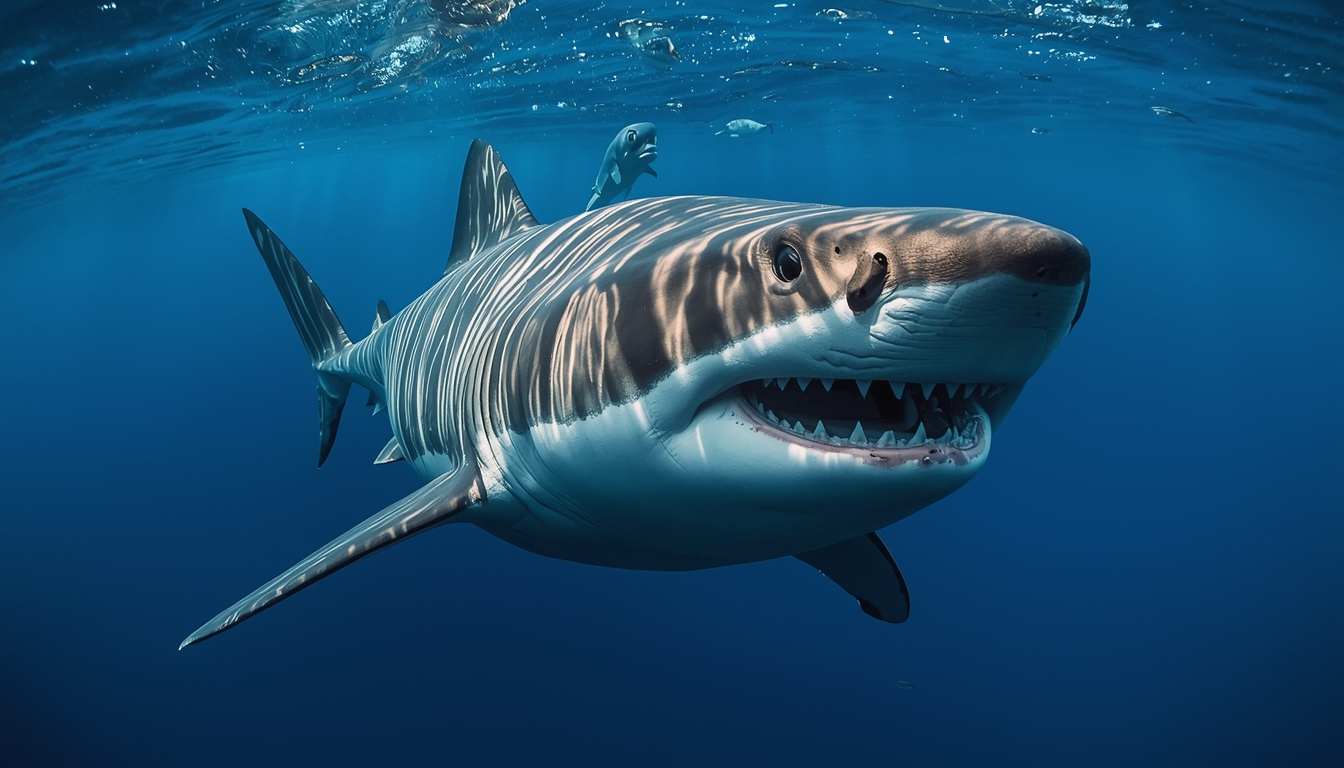
The ocean is full of mysteries, but few creatures capture our imagination like the basking shark. As the second-largest fish in the sea, these gentle giants are famous for their gaping mouths and slow, rhythmic swimming. But where do basking sharks live?From the chilly depths of the Atlantic to the coastal waters of California, their habitat spans a surprising range of the globe. If you are hoping to spot one of these magnificent animals or simply want to understand their world better, you need to know where to look. Let’s dive deep into the specific locations, water conditions, and seasonal patterns that define the basking shark’s home.
Understanding Basking Shark Distribution
Basking sharks (Cetorhinus maximus) are a cosmopolitan species. This means they are found all over the world, though they are quite picky about specific conditions. You won’t typically find them in the warm, tropical waters where you might see reef sharks. Instead, they prefer temperate oceans.
Their geographic range is vast, covering both the Northern and Southern Hemispheres. They are migratory animals, meaning their location changes depending on the time of year, food availability, and water temperature. While they are often associated with surface swimming (hence the name “basking”), recent tracking data shows they spend considerable time in the mesopelagic zone—the “twilight zone” of the ocean—at depths of 200 to 1,000 meters.
What Are the Ideal Conditions for a Basking Shark?
To understand where basking sharks live, you have to understand what they need to survive. They aren’t wandering aimlessly; they are following specific environmental cues.
Water Temperature Preference
Temperature is the biggest factor in basking shark distribution. They thrive in temperate waters, generally preferring temperatures between 46°F and 58°F (8°C to 14.5°C). This preference keeps them out of the freezing polar regions and the hot tropics. However, when they migrate across the equator to switch hemispheres, they stay deep underwater to remain in cooler currents.
Plankton Availability
Basking sharks are filter feeders. They swim with their mouths wide open, filtering massive amounts of water to catch zooplankton, specifically copepods. Therefore, basking shark habitat is strictly tied to areas with high plankton density. They are often found along thermal fronts—places where cold and warm water masses meet. These fronts are nutrient-rich and cause plankton blooms, creating an all-you-can-eat buffet for the sharks.
Coastal vs. Deep Water
Historically, scientists thought these sharks were strictly coastal animals because that is where humans saw them. We now know they inhabit two distinct worlds:
- Coastal Areas: In spring and summer, they come close to shore to feed on surface plankton blooms. This is when sightings occur off cliffs and from boats.
- The Deep Ocean: In winter, they often move offshore to the continental shelf edge and beyond. Here, they dive deep, following the plankton that migrates vertically in the water column.
Basking Shark Habitat in the United States
The U.S. has distinct populations on both the East and West coasts.
The Atlantic Coast
In the Atlantic, basking sharks are often spotted from North Carolina up to New England. The Gulf of Maine is a particularly important hotspot. Nutrient-rich waters in this region support massive plankton populations in the spring and summer.
- Cape Cod, Massachusetts: A reliable spot for sightings in late spring.
- Long Island, New York: Sharks are occasionally seen here as they migrate northward.
The Pacific Coast
On the West Coast, the California Current System provides an ideal environment. Basking sharks were once incredibly common here, numbering in the thousands. Sadly, during the 20th century, they were targeted by eradication programs because they interfered with commercial fishing gear. Today, the population is recovering slowly.
- Monterey Bay: This nutrient-rich bay is a historical gathering ground.
- Channel Islands: Sightings occur here, though they are rare compared to historical numbers.
Basking Sharks in United Kingdom Waters
If you want to see a basking shark in the wild, the UK is arguably one of the best places in the world to do it. The UK’s position on the continental shelf creates perfect feeding conditions.
The Hotspots
- Scotland: The Hebrides, particularly around the Isle of Coll and Tiree, are world-famous for basking shark aggregation. In summer, hundreds of sharks may gather here.
- Cornwall: The southwestern tip of England is another prime location. The water warms up here earlier in the year, bringing the sharks in during late spring.
- Isle of Man: Situated in the Irish Sea, this island sees regular shark traffic during the summer migration.
Research from the University of Exeter has shown that these sharks exhibit “site fidelity,” meaning the same individual sharks return to these specific UK spots year after year.
Basking Shark Populations in Atlantic Canada
Moving north from the US, Canada’s Atlantic waters are a crucial summer home for these giants. The Bay of Fundy, located between New Brunswick and Nova Scotia, is a critical habitat.
Why the Bay of Fundy? It has the highest tides in the world. These massive tidal movements stir up nutrients from the ocean floor, creating explosive plankton growth. Basking sharks in Atlantic Canada are often seen swimming right on the surface in late summer (August and September), taking advantage of this food source.
Off the coast of Newfoundland, sightings are also common. The sharks here are often solitary, but small groups (called “shoals”) form when the feeding is particularly good.
Mediterranean Basking Sharks: Spain & Beyond
While we usually associate these sharks with grey, choppy Atlantic waters, they also inhabit the Mediterranean Sea. However, their behavior here is slightly different.
In Spain and Italy, sightings are less predictable than in the UK. Research suggests the Mediterranean population might be distinct from the Atlantic population. They are often seen in the Alboran Sea (the westernmost part of the Mediterranean) during the winter and spring.
This highlights the basking shark’s adaptability. As long as the water is temperate and plankton is present, they can thrive.
The Mystery of Migration: Where Do They Go in Winter?
For decades, scientists believed basking sharks hibernated on the ocean floor during winter because they disappeared from surface waters. We now know this is a myth. They don’t sleep; they travel.
Transatlantic Crossings
Tracking devices have revealed that basking sharks are capable of massive migrations. Sharks tagged in the Isle of Man have been tracked swimming all the way to Newfoundland, Canada. This transatlantic crossing proves that the populations in the eastern and western Atlantic are connected.
The Southern Migration
Even more shocking was the discovery that basking sharks from the North Atlantic migrate as far south as the Caribbean and even South America. How do they survive the warm tropical water? They stay deep. By swimming at depths of nearly 1,000 meters, they remain in the cool, dark waters they prefer, passing under the tropics undetected until they reach the temperate waters of the Southern Hemisphere.
Real-Life Encounters: Stories from the Deep
The data tells us where they should be, but real-life encounters remind us how elusive these creatures are.
In 2015, a group of kayakers off the coast of Kilkee, Ireland, experienced a rare event. The water was calm and flat—perfect conditions for plankton feeding. Suddenly, a dorsal fin nearly a meter high broke the surface. It was a 25-foot basking shark. Unlike the aggressive nature of a Great White, this shark simply circled the kayakers curiously. It continued filter-feeding, unbothered by the humans, allowing them to witness the distinct white inside of its mouth.
Conversely, in California, sightings are becoming precious events. A marine biologist in Santa Barbara reported seeing a school of 15 basking sharks in 2018. It was the first time in 30 years he had seen a group that large in the area. This event gave hope to conservationists that the Pacific population might finally be bouncing back after decades of decline.
Threats to Basking Shark Habitat
Knowing where basking sharks live also highlights the dangers they face. Their preferred habitats—coastal shelves and nutrient-rich currents—are also the busiest areas for human activity.
- Ship Strikes: Because they feed at the surface and move slowly, basking sharks are highly vulnerable to boat collisions. This is a major issue in the busy shipping lanes of the Northeast Atlantic.
- Bycatch: Fishing nets meant for other species often entangle basking sharks.
- Microplastics: Basking sharks filter thousands of tons of water every hour. In areas with high pollution, they inadvertently ingest massive amounts of microplastics, which can block their digestive tracts and reduce their nutrient absorption.
Conclusion
Basking sharks are citizens of the world, roaming from the coast of Cornwall to the depths of the Caribbean. Their habitat is defined not by borders, but by the search for food and cool water. While they spend much of their lives hidden in the deep ocean, the coastal zones of the UK, Canada, and the US remain the best places to catch a glimpse of them. Understanding their distribution helps us protect these gentle giants, ensuring that their migratory paths remain safe for generations to come.
FAQs
Where is the best place to see a basking shark?
The Hebrides in Scotland and the coast of Cornwall (UK) are widely considered the best places in the world for consistent sightings, particularly between May and August.
Do basking sharks live in tropical waters?
No, they do not live in tropical surface waters. However, they do travel through tropical regions during migration by swimming at great depths to stay in cooler water.
Are basking sharks dangerous to humans?
No. Despite their massive size, basking sharks are passive filter feeders. They eat plankton, not people. However, their skin is very rough, so you should never touch them.
How deep can a basking shark swim?
While famous for swimming at the surface, basking sharks can dive to depths of at least 900 to 1,000 meters (over 3,000 feet) to find food or regulate their temperature.