
Of all the prizes haunting the deep ocean, few command the same respect and awe as the broadbill swordfish. Known as the “gladiator of the sea,” this prehistoric-looking predator is the ultimate offshore challenge for anglers. It’s elusive, powerful, and inhabits the most inhospitable depths of the ocean. For a long time, catching one was considered a stroke of luck—a rare byproduct of targeting other species. Today, however, it has evolved into a highly technical pursuit, drawing anglers who crave the complexity of the hunt as much as the battle itself.This guide explores the world of swordfishing, from the biology that makes this fish a super-predator to the specialized techniques required to bring one boatside. Whether you are curious about the shift from harpoons to electric reels or looking for the best global hotspots to land a giant, this is your roadmap to the pinnacle of big-game fishing.
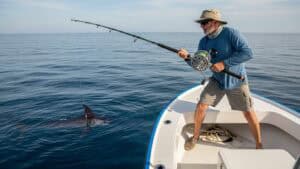
What is Swordfishing? Understanding the Challenge
Swordfishing is the targeted pursuit of Xiphias gladius, or the broadbill swordfish. Unlike general offshore trolling where you might hook a mahi-mahi or a wahoo by chance, swordfishing is a deliberate, calculated game. It requires specific depths, precise drifts, and often, specialized lighting to mimic the bioluminescence of the deep ocean.
The Unique Target
What makes the swordfish such a difficult quarry? First, there is the bill. Unlike the round bill of a marlin, a swordfish’s bill is flat and broad—hence the name “broadbill.” They use this weapon to slash at prey rather than impale it, which often results in subtle bites that are easy to miss, even on heavy tackle. Furthermore, they possess incredibly soft mouths, meaning hooks can pull free easily during a fight that might last hours. Combined with their habit of sounding (diving deep) when hooked, landing a swordfish requires a blend of brute force and delicate finesse.
Swordfishing vs. Other Big-Game Fishing
If you have fished for marlin or tuna, you know the excitement of a surface explosion. Swordfishing is different. It is often a mental game played in the dark or at crushing depths. While billfish like sailfish are often caught on light tackle near the surface, swordfish are frequently targeted 1,500 feet down during the day. The dynamic of the fight is heavier and more grueling, often described as trying to lift a swimming anvil from the bottom of the sea.
A History of the Hunt: From Harpoons to Electric Reels
The history of swordfishing is as deep as the waters the fish inhabit. It began thousands of years ago in the Mediterranean, where fishermen used small wooden boats and hand-thrown harpoons to secure their catch.
The Harpoon Era
In the North Atlantic, particularly off the coast of New England and Nova Scotia, the commercial harpoon fishery became legendary. During the early 20th century—and immortalized in stories like The Perfect Storm—swordfish boats were recognizable by their long pulpits extending off the bow and tall masts for spotting finning fish. Spotter planes eventually joined the fleet, guiding boats to sunning swordfish. It was a rugged, dangerous profession that relied more on marksmanship than angling skill.
The Recreational Revolution
The transition to rod-and-reel fishing changed the sport entirely. Initially, it was a nighttime game. Anglers would drift baits under the moonlight, hoping for a swordfish to rise from the depths to feed. It was mysterious and often inconsistent.
Modern Evolution
The real game-changer arrived with the development of daytime deep-dropping. Pioneered in Florida, this technique proved that you didn’t have to wait for the fish to come to you; you could go to them. By dropping baits down to the bottom where swordfish rest during the day, anglers unlocked a 24/7 fishery. This innovation, paired with the advent of high-torque electric reels, made the sport accessible to a wider range of anglers and boats.
Know Your Enemy: Swordfish Biology & Behavior
To catch a swordfish, you must understand how it lives. These are pelagic wanderers found in temperate and tropical oceans worldwide, often patrolling the thermocline where water temperatures shift rapidly.
The Diurnal Migration
Swordfish exhibit a behavior known as diurnal vertical migration. During the day, they descend to depths of 1,500 to 2,000 feet or more to rest and digest. The water here is near freezing and pitch black. At night, they rise to the surface or mid-water column (100 to 400 feet) to hunt. This predictable movement dictates everything about how anglers target them.
Feeding Habits
Their diet consists largely of squid, mackerel, and hake. Because they slash their prey to incapacitate it before eating, the “bite” on a fishing rod often looks like a series of taps or a sudden slack in the line rather than a hard run. Anglers must be vigilant, often teasing the fish into committing to the bait.
Scientific Context: The Heated Brain
One of the most fascinating aspects of swordfish biology is their “brain heater.” They possess a specialized organ behind their eyes that warms their brain and eyes, allowing them to process visual information significantly faster than their cold-blooded prey in the frigid depths. This gives them a distinct predatory advantage, allowing them to react instantly to movement in near-total darkness.
The Great Debate: Day vs. Night Swordfishing
The two primary methods of catching swordfish offer completely different experiences.
Daytime Deep-Dropping
This method involves dropping a heavy lead weight and bait all the way to the bottom, usually between 1,200 and 1,800 feet.
- Technique: The boat must be kept stationary against the current to ensure the line drops straight down. Once the weight hits the bottom, the angler reels up slightly to position the bait just above the sea floor.
- Success Rate: Daytime fishing is widely considered the best way to catch larger, trophy-sized fish. It is a technical, gear-intensive approach that relies heavily on reading the rod tip for the slightest variation.
Nighttime Drifting
Night fishing is the traditional approach and offers a more sensory experience.
- Technique: Anglers set out a spread of baits at staggered depths (e.g., 100, 200, 300, and 400 feet) using balloons or floats. Chemical light sticks are attached to the leaders to attract attention.
- Experience: Drifting under the stars is peaceful until a reel starts screaming. Night fishing generally produces a higher quantity of bites, though the average fish size tends to be smaller than those caught during the day.
| Feature | Daytime Deep-Dropping | Nighttime Drifting |
| Depth | 1,200 – 2,000+ ft | 100 – 400 ft |
| Primary Gear | Electric Reels / Bent Butts | Conventional 50-80W Reels |
| Typical Size | Larger / Trophy Potential | Mixed / High Quantity |
| Key Challenge | Detecting the bite at extreme depth | Managing multiple lines in the dark |
Essential Gear: Rods, Rigs, and Bait
You cannot bring a knife to a gunfight, and you certainly cannot bring a bass rod to a swordfight. The gear must be robust enough to handle extreme pressure and aggressive fish.
Rods & Reels
- Electric vs. Manual: For daytime fishing, electric reels like the generic heavy-duty models or high-end brands are standard. They allow anglers to check bait without manually cranking up 2,000 feet of line, which can take 20 minutes or more. For the purist or during night trips, 50 to 80-class conventional reels are preferred to enjoy the physical battle.
- Rod Selection: Bent-butt rods are essential for deep-dropping. The angle keeps the line away from the gunwale and provides better leverage when the rod is left in the holder during the initial hook-up.
Line & Leaders
- Main Line: High-visibility braided line in the 65-80 lb test range is ideal. Braid has zero stretch, which is crucial for detecting a bite half a mile down, and its thin diameter cuts through ocean currents better than monofilament.
- Wind-on Leaders: A long, heavy monofilament wind-on leader (150-300 lb test, often 100 feet long) is necessary. This serves as a shock absorber and provides abrasion resistance against the swordfish’s rough bill and skin during the endgame.
Weights & Terminal Tackle
Getting a bait down 1,800 feet quickly requires weight—lots of it. Anglers use “break-away” systems involving concrete bricks or heavy stick leads.
- Lights: In the deep, light attracts life. Attaching water-activated strobe lights or diamond lights to the leader helps swordfish locate the bait in the gloom.
Best Baits
- Dead Bait: High-quality squid is the gold standard. Large, stitched mackerel or bonito bellies are also excellent choices because they are durable and release a strong scent trail.
- Artificial: Recent years have seen the rise of soft plastic squid imitations. These are incredibly durable and can withstand the slashing attacks of a swordfish without falling apart, giving the fish multiple chances to eat.
Global Hotspots: Where to Find the Giants
While swordfish roam all major oceans, certain locations are famous for their populations.
The Atlantic Ocean
The Florida Keys and South Florida are arguably the epicenter of recreational swordfishing. The Gulf Stream runs close to shore here, giving anglers easy access to deep water. It is a year-round fishery where catching a swordfish is a very real possibility for anyone with the right gear.
The Northeast Canyons
Off the coasts of New Jersey, New York, and Massachusetts, the continental shelf drops into deep canyons. This is the land of the giants. Anglers head here in late summer and fall to target “pumpkin” swordfish—fish that have taken on an orange hue from a diet of shrimp and krill—which can grow to massive sizes.
Pacific & Indian Oceans
- New Zealand: Known for grander-sized broadbills, this is a destination for serious trophy hunters.
- California: The Southern California bight has seen a resurgence in swordfish activity, with deep-dropping becoming increasingly popular off the coast of San Diego and the Channel Islands.
- Cabo San Lucas: While famous for marlin, the nutrient-rich waters off Baja also hold impressive numbers of swordfish.
Safety, Regulations, and Conservation
Swordfishing is not without its risks and responsibilities.
Legal Considerations
Before heading out, ensure you possess the necessary HMS (Highly Migratory Species) permits for your vessel. Regulations regarding minimum size (often measured from the lower jaw to the fork of the tail) and bag limits vary strictly by region. Ignorance of the law can result in hefty fines and the seizure of gear.
Safety First
Offshore fishing is inherently dangerous. You are often fishing miles from shore, sometimes at night.
- Handling the Fish: A green (lively) swordfish on the deck is a dangerous animal. Their bill is a legitimate weapon capable of slashing legs and puncturing fiberglass. Always subdue the fish completely before bringing it aboard.
- Weather: Deep-dropping often requires venturing far offshore. Always check weather windows carefully, as conditions can change rapidly in the deep ocean.
Sustainability
The good news is that swordfish stocks have rebounded significantly. After being overfished in the late 20th century, successful management plans have allowed populations to recover. Today, swordfish are considered a sustainable seafood choice in many regions, provided regulations are followed. Promoting catch-and-release for smaller “rat” swordfish helps ensure the fishery remains healthy for future generations.
Frequently Asked Questions (FAQ)
What is the best time of year for swordfishing?
While swordfish can be caught year-round in places like Florida, the fall months often produce the largest fish in the Northeast Atlantic, while late summer can be excellent in the Pacific.
How deep do you drop for swordfish during the day?
Daytime drops typically range from 1,200 to 2,000 feet, targeting the bottom structure or the scattering layer where the fish are resting.
Do you need an electric reel for swordfishing?
It is not strictly mandatory, but for daytime deep-dropping, an electric reel is highly recommended to manage the heavy weights and extreme depths efficiently. For night fishing, conventional manual reels work perfectly.
What is the best bait for catching swordfish?
Squid is the most universal and effective bait, followed closely by bonito strips and mackerel.
Is swordfish good to eat?
Yes, swordfish is prized for its firm, steak-like texture and mild flavor. It is excellent grilled or broiled.
How big do recreational swordfish get?
Recreational catches typically range from 50 to 200 pounds, but trophy fish exceeding 400, 500, or even 600 pounds are caught every year. The all-tackle world record is over 1,100 pounds.
What is the difference between a swordfish and a marlin?
The most obvious differences are the bill (flat on a swordfish, round on a marlin) and the dorsal fin. A swordfish has a rigid, shark-like dorsal fin that does not retract, whereas a marlin has a soft dorsal fin that can fold down.
Can you catch swordfish from a center console boat?
Absolutely. The rise of large, capable center console boats has revolutionized the sport, making deep-dropping accessible without a large sportfishing yacht.
Why do anglers use lights for swordfishing?
Lights mimic the bioluminescence of deep-sea creatures like squid, which are a primary food source for swordfish. The light attracts the swordfish to the bait in the darkness.
How do you unhook a swordfish safely?
If releasing the fish, keep it in the water. Use a de-hooking device or long-handled pliers to remove the hook. If the hook is deep, cut the leader as close to the hook as possible. Never try to wrestle a live swordfish into the boat for unhooking.
Ready to Drop?
Swordfishing is more than just catching a fish; it is an expedition into the unknown. From the meticulous rigging of the bait to the long, suspenseful wait watching the rod tip, every element builds toward that singular moment when the line comes tight. It is a test of patience, endurance, and skill. The bite might come five minutes after the weight hits the bottom, or it might take five hours. But when you see that silver-purple flash deep in the water and realize you are connected to a creature of the deep, every second of effort becomes worth it.
If you are ready to experience the thrill of the deep drop, consider booking a charter with a professional guide to learn the ropes safely. Or, if you are ready to gear up, visit our shop to find the perfect electric reel setup for your first adventure. The gladiator is waiting.